
I was knee-deep in a damp hedgerow last Tuesday, squinting through a hand lens at a cluster of Bombus terrestris—the buff-tailed bumblebee—only to find a colony looking particularly ragged. It’s easy to see a few sick individuals and immediately jump to the most dramatic conclusion possible, but that’s where we usually go wrong. We see a headline about a “mysterious plague” and assume we know exactly how disease affects wild populations, when in reality, we’re often just looking at a single, messy data point. Most of the time, what looks like a sweeping epidemic is actually a complex interplay of weather, habitat loss, and nutritional stress that makes a species more vulnerable to a pathogen that was already there.
I’m not here to feed you the doom-and-gloom narratives that make conservation feel like a lost cause. Instead, I want to look at what the actual survey data tells us when we strip away the sensationalism. I’ll be walking you through the difference between a genuine biological threat and the statistical noise that often confuses amateur observers. My goal is to show you how to distinguish between a localized outbreak and a true population trend, so you can focus your energy on the changes that actually matter for biodiversity.
Table of Contents
Deciphering Population Dynamics and Disease Outbreaks

Deciphering Population Dynamics and Disease Outbreaks
When I’m out on a transect, it’s easy to fall into the trap of thinking a sudden drop in numbers means a plague has arrived. We see a spike in mortality and immediately want to point to a single culprit, but population dynamics and disease outbreaks are rarely that linear. Often, what looks like a mass die-off is actually a misunderstanding of how we sample. If a survey happens during a particularly dry spell, you might see a crash in certain species, not because they are all dying of a virus, but because their microhabitat has shifted.
We have to distinguish between a localized event and a systemic shift. Pathogen transmission in ecosystems is heavily dictated by how crowded or fragmented a habitat is; a healthy, connected hedgerow might actually buffer a population better than a tiny, isolated patch of wildflowers where everything is squeezed together. I try to remind my moth group that a single bad season isn’t necessarily a sign of a collapsing species, but we do need to watch for patterns that suggest a pathogen is actually outpacing a population’s ability to recover.
Why Environmental Factors Affecting Animal Health Matter Most
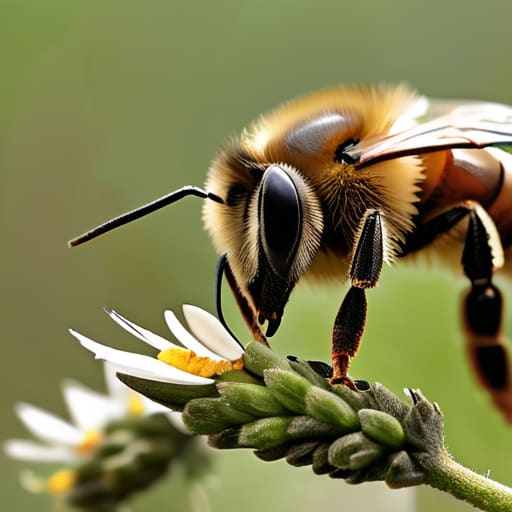
When I’m out on a transect, I’m rarely looking for a sudden, dramatic die-off. Instead, I’m looking at the subtle, grinding shifts in the landscape that make a species more vulnerable in the first place. We tend to focus on the pathogen itself—the fungus, the virus, the parasite—but we often ignore the context. Environmental factors affecting animal health act like a volume knob for disease; a landscape that is fragmented or stripped of its hedgerows might not kill a colony of bees overnight, but it stresses them enough that a minor infection becomes a terminal event.
It’s a bit like trying to stay healthy while living in a constant state of sleep deprivation and poor nutrition. If a habitat loses its floral diversity, the insects aren’t just hungry; their immune systems are compromised. This is where the real complexity of pathogen transmission in ecosystems lies. It isn’t just about how a microbe moves from point A to point B, but how a degraded environment lowers the threshold for that movement to become a crisis. We can’t just treat the sickness; we have to look at the soil, the temperature, and the connectivity of the land.
Moving Beyond the 'Plague' Narrative: Five Ways to Read the Data
- Distinguish between a pathogen and a stressor. Just because a population is dropping doesn’t mean a virus did the heavy lifting; often, a lack of nutritional diversity in a hedgerow makes a species more susceptible to a bug that was already present but manageable.
- Look for the ‘hidden’ survivors. When we see a spike in disease, we often forget to look at the individuals that didn’t die. Understanding why some insects show resilience to a specific parasite is much more useful for conservation than just counting the casualties.
- Stop treating every dip as a new outbreak. In my transect work, I’ve learned that seasonal fluctuations can look terrifyingly like a disease crash if you aren’t looking at multi-year datasets. One bad summer isn’t necessarily a pandemic; it might just be a bad year for larval survival.
- Prioritize habitat connectivity over single-species rescue. It is much harder to manage a disease when populations are forced into tiny, isolated pockets of greenery. Healthy, connected landscapes allow for the natural genetic flow that helps a population outrun a localized infection.
- Question the survey design. If a study says a disease is “devastating” a population, I want to know if they were actually measuring disease prevalence or if they were just seeing a drop in catch rates due to changes in weather or sampling timing.
What to actually look for when the data gets messy
Stop treating every sudden population dip like a cinematic plague; most of the time, it’s just a noisy data point from a survey that wasn’t actually designed to track disease in the first place.
We need to shift our focus from chasing single “killer pathogens” to looking at how habitat fragmentation and climate stress weaken an organism’s baseline immunity before a disease even arrives.
Good conservation requires distinguishing between a genuine biological crisis and a statistical fluke, because if we base our policy on one bad headline, we lose the credibility we need to fight the real, slower-moving threats.
Moving Beyond the Panic
We have to stop viewing every sudden drop in a local population as an inevitable, unstoppable plague. As we’ve discussed, the reality is usually a messy interplay between environmental stressors—like a particularly harsh winter or a fragmented habitat—and the pathogens that take advantage of a weakened host. It isn’t always a single “killer” disease; often, it is the cumulative weight of a degraded landscape that makes a species vulnerable in the first place. When we look at the survey data, we see that disease is frequently a symptom of a larger ecological imbalance rather than just a random act of biological cruelty.
If there is any silver lining to be found in the data, it is that we actually know which levers to pull. We don’t need to solve every complex epidemiological puzzle to make a difference; instead, we can focus on building ecological resilience. By protecting hedgerows, diversifying garden plantings, and maintaining connected corridors, we give wildlife the nutritional and structural buffer they need to withstand the inevitable arrival of a pathogen. Conservation isn’t about chasing every microscopic threat; it’s about creating a world where nature is robust enough to fight its own battles.
