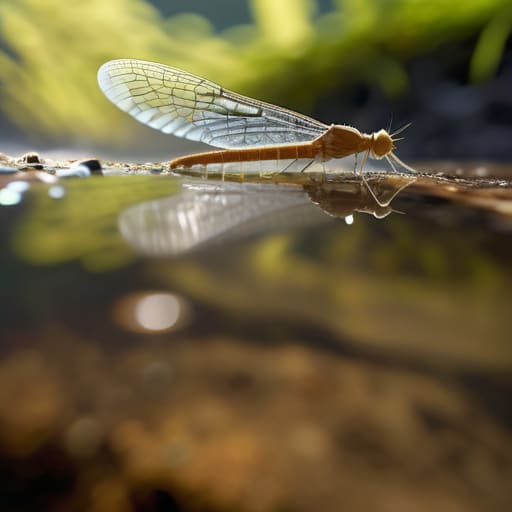
I remember standing knee-deep in a drainage ditch outside a semi-rural industrial estate, clutching a sample jar and trying to ignore the way the silt felt like sludge against my skin. I wasn’t looking for a “catastrophic biological collapse”—that’s the kind of phrase that makes my eyes roll—I was just looking for the Odonata larvae that should have been there. Instead, I found a soup of runoff that felt less like a scientific mystery and more like a direct insult to the local food web. We spend so much time arguing over sweeping, apocalyptic headlines about how water pollution affects ecosystems, but we rarely talk about the actual, grinding reality of what happens when a single stream loses its chemical balance.
I’m not here to give you a lecture on global catastrophe or sell you on a miracle cure that doesn’t exist. My goal is to strip away the alarmist jargon and look at what the actual field data tells us about nutrient loading and chemical runoff. I want to show you how these shifts move through a food chain, from the microscopic to the macro, and why some populations bounce back while others simply vanish. This isn’t about fear; it’s about understanding the mechanics of what we are actually losing.
Table of Contents
The Eutrophication Process in Lakes More Than Just Green Water
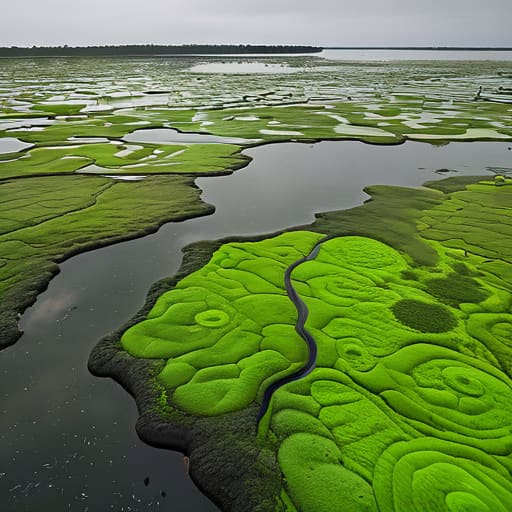
When people talk about a lake turning green, they usually think it’s just a bit of an eyesore—a nuisance for swimmers. But if you look at the data, the eutrophication process in lakes is much more aggressive than a simple change in color. It starts with an influx of nutrients, usually nitrogen or phosphorus from agricultural runoff, which acts like high-octane fuel for algae. This isn’t just “more life” in the water; it’s a massive, lopsided spike in biomass that fundamentally breaks the existing balance.
The real damage happens beneath the surface. As that massive bloom of algae eventually dies, it sinks to the bottom, where bacteria move in to decompose it. This decomposition process consumes oxygen at an alarming rate, creating “dead zones” where dissolved oxygen levels plummet. This is where we see genuine freshwater ecosystem degradation. It isn’t just that the water looks different; it’s that the oxygen-dependent species—the things that actually make a lake a functioning community—simply cannot breathe. We aren’t just looking at a change in scenery; we are witnessing a systemic collapse of the habitat.
Measuring Freshwater Ecosystem Degradation Without the Hyperbole

When we talk about freshwater ecosystem degradation, the conversation usually swings between “the water is crystal clear” and “everything is dead.” In reality, the data usually sits somewhere in a messy, complicated middle. If you look at actual water quality monitoring techniques, you aren’t just looking for a single “poison” molecule; you’re looking at a shifting baseline of parameters like dissolved oxygen, pH, and conductivity. It’s rarely a single catastrophic event that wipes out a population, but rather a slow, grinding erosion of stability.
The difficulty lies in the fact that aquatic biodiversity loss doesn’t always look like a mass die-off of fish. More often, it’s the subtle disappearance of sensitive macroinvertebrates—the stoneflies and mayflies that tell us the system is actually functioning. When I’m out in the field, I’m not just looking for what’s there, but for what’s missing. We need to stop waiting for a headline-grabbing mass mortality event to acknowledge that a system is struggling; by then, the ecological architecture has often already collapsed.
Beyond the Headlines: Five Practical Ways to Read the Water
- Look for the indicator species, not just the visible sludge. While a thick layer of duckweed looks like a problem, it’s often the absence of specific macroinvertebrates—like certain stonefly larvae that require high oxygen levels—that tells the real story of chemical runoff.
- Distinguish between nutrient loading and toxicity. A spike in nitrates from fertilizer runoff triggers different ecological responses than a heavy metal spill; one causes an explosion of algae, while the other can lead to immediate, silent mortality in sensitive insect populations.
- Check the “buffer” capacity of the surrounding landscape. A stream running through a managed field with zero margins is far more vulnerable to sudden pollutant spikes than one buffered by a wide, unploughed strip of wildflowers and grasses.
- Don’t mistake a single “bad” sample for a trend. In my field work, I’ve learned that a single high reading of a pollutant might be a transient event—like a heavy rainfall washing silt into a drain—rather than a permanent shift in the ecosystem’s baseline.
- Watch the oxygen levels, not just the clarity. Water can look perfectly clear but be biologically “dead” because the decomposition of organic matter has stripped the dissolved oxygen, leaving nothing for the creatures that actually drive the food web.
What We Actually Know (and What We’re Still Figuring Out)
Pollution isn’t a single “on/off” switch for an ecosystem; it’s a shifting baseline where the real danger lies in how nutrient spikes, like nitrogen runoff, fundamentally rewrite the chemical rules of the water.
We have to move past the “green water” visual—eutrophication is a complex chain reaction of oxygen depletion and habitat loss that can hollow out a lake from the bottom up long before the surface looks “sick.”
While the headlines often demand immediate, sweeping bans, the data shows we need more granular, localized monitoring to distinguish between a temporary seasonal bloom and a genuine, systemic population collapse.
Beyond the Data Points
When we strip away the sensationalist headlines, the reality of water pollution is less about a sudden, cinematic explosion of death and more about a slow, systemic erosion of biological complexity. We have looked at how nutrient runoff triggers eutrophication, turning vibrant lakes into oxygen-depleted zones, and we have discussed why our metrics for “health” need to move beyond simple chemical snapshots to look at actual community composition. It isn’t just about whether the water is clear or murky; it is about whether the specific, delicate web of macroinvertebrates and fish that should be there can actually survive the shift. Understanding this distinction is vital because effective conservation requires precision, not just panic.
It is easy to feel a sense of paralysis when looking at the sheer scale of catchment-level degradation, but I find hope in the granular details. Every time a local group monitors a stream or a farmer adjusts their buffer strips to catch runoff before it hits the ditch, we are seeing the groundwork for recovery being laid. We don’t need to solve every chemical imbalance overnight to make a difference; we just need to start making decisions based on what the biology is actually telling us. If we can move past the hyperbole and focus on the actual evidence, we might just give these ecosystems the breathing room they need to rebuild themselves.
