
Last Tuesday, I was knee-deep in a damp hedgerow margin, trying to scrape a sample of soil without losing my dignity or my favorite trowel, when I realized how much the “Wood Wide Web” metaphor has actually done a disservice to the science. Don’t get me wrong, the idea of trees whispering to each other through a mystical underground network is great for a Netflix documentary, but it glosses over the gritty, competitive reality of how fungi fit the ecosystem. It isn’t just a polite conversation; it’s a high-stakes, resource-heavy logistical nightmare of nutrient exchange and chemical signaling that keeps the soil from becoming nothing more than dead dust.
I’m not here to sell you on the magic of mushrooms or give you more poetic fluff that falls apart under a microscope. Instead, I want to talk about the actual mechanics—the way these organisms function as the unseen infrastructure of our landscapes. I’ll be looking at what the surveys actually show us about fungal density and why understanding the difference between a symbiotic relationship and a parasitic one is vital if we want to actually support biodiversity. We’re going to skip the hype and look at the data.
Table of Contents
The Real Mechanics of Nutrient Cycling in Soil
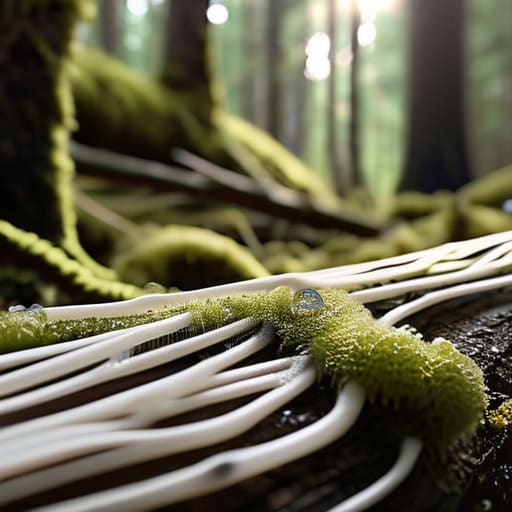
When people talk about the biological decomposition process, they usually picture a pile of rotting leaves just turning into “dirt.” It feels passive, like something that just happens. But if you look at the actual data from soil cores, it’s much more aggressive. It’s a high-speed chemical breakdown managed by saprotrophic organisms explained through their sheer metabolic hunger. These fungi aren’t just sitting there; they are actively secreting enzymes to dismantle complex organic polymers that most other life forms can’t even touch.
This isn’t just about making soil “richer,” though. We need to talk about the fungal role in the carbon cycle if we want to be serious about climate resilience. As these organisms break down organic matter, they aren’t just releasing CO2; they are also sequestering carbon into the soil structure itself. It’s a delicate, messy balancing act. If the fungal community is healthy, that carbon stays put. If the soil is disturbed—say, by heavy tilling or chemical runoff—that cycle breaks, and the system loses its ability to hold onto the very building blocks it needs to function.
Why Mycelium Network Functions Matter More Than We Think

We often talk about the “Wood Wide Web” like it’s some mystical, sentient internet connecting trees, but that framing does a disservice to the actual grit of the work. When I’m out in the field, I’m not looking for magic; I’m looking at the mechanics of mycelium network functions. These aren’t just passive threads; they are active, aggressive, and incredibly efficient conduits. They facilitate the complex symbiotic relationships in nature that allow a forest to act as a single, coordinated unit rather than just a collection of individual plants competing for sunlight.
It’s also where we need to get serious about the math of the planet. If you look at the data regarding the fungal role in the carbon cycle, the scale is staggering. Fungi aren’t just “helpers”; they are the primary gatekeepers of how much carbon stays locked in the ground versus how much gets released back into the atmosphere. If we miscalculate how these networks respond to soil disturbance or temperature shifts, our entire climate modeling is essentially guesswork. We can’t afford to treat them as a background character in the ecosystem.
Beyond the "Magic" Label: How to Actually Support Fungal Health
- Stop treating your soil like a sterile medium. If you’re using heavy synthetic fungicides or high-nitrogen fertilisers, you aren’t just feeding plants; you’re effectively nuking the very mycelial networks that make nutrient uptake efficient in the first place.
- Prioritise “messy” organic matter. Fungi need a slow-release buffet, not a fast-food hit of liquid nutrients. Leaving leaf litter or wood mulch in your garden beds provides the complex carbon structures that saprotrophic fungi need to actually build those underground networks.
- Respect the mycorrhizal partnership. It’s not just about adding stuff to the soil; it’s about protecting the symbiotic relationship between fungi and plant roots. When we disturb soil too deeply through constant tilling, we physically shred the delicate hyphal threads that act as the system’s communication lines.
- Diversify your plant selection to support diverse fungal guilds. A monoculture garden is a fungal desert. By planting a varied mix of native species, you create different types of root exudates, which in turn supports a wider, more resilient community of fungal species rather than just one or two generalists.
- Watch the moisture, but don’t drown it. Fungi need humidity to thrive, but stagnant, waterlogged soil creates anaerobic conditions that favour bacteria over fungi. Aim for that middle ground of consistent, breathable moisture—the kind you find in a healthy, well-structured hedgerow margin.
Beyond the "Magic" Narrative: What We’re Actually Looking At
Stop treating fungi as a mystical, invisible force; they are a physical, resource-heavy infrastructure that requires specific soil conditions—like moisture and undisturbed organic matter—to actually function.
Mycelial networks aren’t just “internet cables” for plants to chat through; they are active biological traders that move carbon, nitrogen, and phosphorus in exchange for sugars, making them the literal economy of the soil.
We need to move past the “fungi are good” generalization and look at the data on specific fungal-plant relationships, because a garden with high fungal diversity is far more resilient to climate shifts than one relying on a single, dominant species.
Moving Beyond the Magic Trick
When we strip away the poetic metaphors about “the wood wide web,” we’re left with something much more practical and, frankly, more impressive: a complex, biological logistics network. We’ve looked at how these organisms drive nutrient cycling and why the structural integrity of mycelial networks is the literal foundation of soil health. It isn’t just about plants talking to each other; it is about the physical movement of carbon and nitrogen that allows an entire ecosystem to function without crashing. Understanding this distinction matters because when we talk about conservation, we shouldn’t just be protecting “pretty forests”—we need to be protecting the unseen chemical machinery that makes those forests possible in the first place.
It is easy to feel small when you realize how much of the world’s heavy lifting happens entirely out of sight, beneath a few centimeters of leaf litter. But there is a strange kind of comfort in that reality. If we can shift our focus from the grand, sweeping vistas to the actual, measurable processes happening in the dirt, we can start making better decisions. Whether it’s how we manage agricultural margins or how we treat our own back gardens, the goal is to stop disrupting the foundational infrastructure. We don’t need to perform miracles to help nature; we just need to stop breaking the systems that are already working incredibly hard to keep us all alive.
