
I once spent four hours waist-deep in a drainage ditch near Ely, trying to record macroinvertebrates while a persistent drizzle turned my field notebook into a soggy, illegible mess. It wasn’t the cinematic, “nature is healing” moment you see in documentaries; it was cold, muddy, and smelled intensely of decaying organic matter. We often talk about how wetlands function ecologically as if they are these pristine, mystical filters, but the reality is much more visceral and unglamorous. They aren’t just passive sponges; they are messy, high-stakes chemical processing plants where life and decay are constantly negotiating.
I’m not here to sell you on the “magical wetland” trope or drown you in academic jargon that obscures more than it reveals. Instead, I want to walk you through what the data actually shows when we look past the sweeping headlines. I’ll explain the specific, mechanistic ways these habitats manage nutrients and water, and I’ll be honest about where our understanding of these systems is still a bit thin. My goal is to move beyond the hype so you can understand the actual, functional value of these spaces.
Table of Contents
Decoding the Truth About Wetland Carbon Sequestration
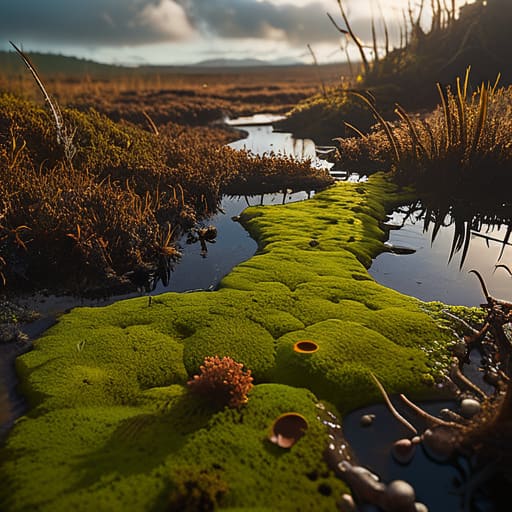
Every time I scroll through a science news feed, I see wetlands described as these flawless, infinite vacuum cleaners for atmospheric CO2. It’s a seductive narrative, and it’s not entirely wrong, but it’s dangerously reductive. When we talk about wetland carbon sequestration, we aren’t just talking about a magical sponge that sucks up carbon and holds it forever. We are talking about a complex, often finicky balance of anaerobic conditions and organic matter accumulation. If a wetland dries out—whether due to poor management or shifting weather patterns—that stored carbon doesn’t just stay put; it can oxidize and vent right back into the atmosphere.
The reality is that the capacity for a marsh to act as a sink depends heavily on the specific chemistry of the soil and the rate of plant decay. It isn’t a universal constant. We need to move away from treating these sites as monolithic “carbon warehouses” and start looking at the site-specific variables that dictate whether a peatland is actually helping us or inadvertently contributing to emissions. If we base our entire conservation strategy on a simplified headline, we risk misallocating resources to the very areas that might be most vulnerable to carbon loss.
Why Nutrient Cycling in Wetlands Is More Than Just Chemistry

When we talk about nutrient cycling in wetlands, textbooks usually frame it as a neat loop of nitrogen and phosphorus moving through soil and water. It looks very clean on a diagram. But when you’re actually standing in a marsh, it’s much more chaotic and, frankly, much more interesting. It isn’t just a chemical reaction; it is a massive, slow-motion biological engine driven by the microbes in the muck and the plants that anchor the system. These organisms are doing the heavy lifting, breaking down organic matter and preventing it from simply washing downstream into our rivers and oceans.
This process is a core part of the broader ecosystem services of marshes, acting as a biological filter that stabilizes the entire landscape. If the cycling breaks down—say, because of sudden temperature shifts or excessive runoff—the whole system can flip from a nutrient sponge to a source of pollution. We often focus on the big-picture “services” like flood mitigation, but we miss the reality that wetland biodiversity importance is tied directly to these microscopic workers. Without the specific interplay between the flora and the soil chemistry, the “purification” we rely on simply ceases to function.
Beyond the Buzzwords: 5 Realities of Wetland Function
- Stop treating them as static “sinks.” Wetlands are dynamic, breathing systems. If we only focus on how much carbon they hold right now, we miss the fact that a slight shift in water level or temperature can turn a carbon-storing peatland into a carbon-releasing nightmare overnight.
- Hydrology isn’t just about “wetness”; it’s about timing. For a wetland to function, the pulse of the water has to match the life cycles of the things living in it. If a seasonal flood happens two weeks too late because of a new drainage ditch upstream, the entire reproductive cycle of local amphibians or macroinvertebrates can collapse.
- Biodiversity isn’t a trophy; it’s a toolkit. We often talk about “saving species,” but what we actually need is the functional diversity that those species provide. You don’t just want a lot of bugs; you want the specific combination of decomposers, predators, and pollinators that keep the nutrient loop from breaking.
- Edge effects are everything. In my fieldwork, I see how much the “margin”—that messy, transition zone between open water and dry land—matters. If you manage a wetland but ignore the surrounding buffer, you aren’t actually protecting the core ecosystem; you’re just maintaining a beautiful, isolated island that can’t support a real population.
- Data quality matters more than headline certainty. When we say a wetland is “improving,” we need to know if that’s based on a single season of opportunistic sightings or a rigorous, multi-year survey. We have to be careful not to mistake a temporary spike in one species for a healthy, resilient ecosystem.
Beyond the Textbook: What We Actually Need to Track
Stop treating wetlands as monolithic “carbon sponges”; we need to move past the broad claims and start looking at the specific, messy interactions between soil types and local vegetation that dictate whether a site is actually storing carbon or just venting it.
Nutrient cycling isn’t just a series of chemical equations to be memorized for an exam; it is a physical, biological process that depends entirely on the health of the organisms living in the muck, meaning we can’t protect the chemistry without protecting the life within it.
Conservation efforts fail when they rely on sweeping generalizations, so our priority must shift toward granular, site-specific data that acknowledges where the evidence is robust and where we are still largely guessing.
Moving Beyond the Buzzwords
When we step back from the sweeping headlines, the reality of wetland ecology is much more granular. It isn’t just about a vague “ecosystem service” or a single carbon metric; it is about the precise, often invisible mechanics of nutrient cycling and the way these landscapes act as biological filters. We’ve seen that while the carbon sequestration potential is massive, it isn’t a magic wand that works without careful management, and the chemical complexity of these sites is what actually drives the life within them. To protect these spaces, we have to stop treating them like monolithic environmental tools and start respecting them as the complex, messy, and highly specific systems they actually are.
Ultimately, my work in the field has taught me that conservation fails when it relies on oversimplified narratives. If we want to save our wetlands, we can’t just shout about “nature’s sponges” and hope for the best; we have to understand the actual data behind the decline and the specific ways these habitats function. It is easy to feel overwhelmed by the scale of biodiversity loss, but there is a quiet power in getting the details right. When we move past the hype and focus on the actual ecological mechanics, we stop making reactive arguments and start building evidence-led strategies that actually stand up to scrutiny.
