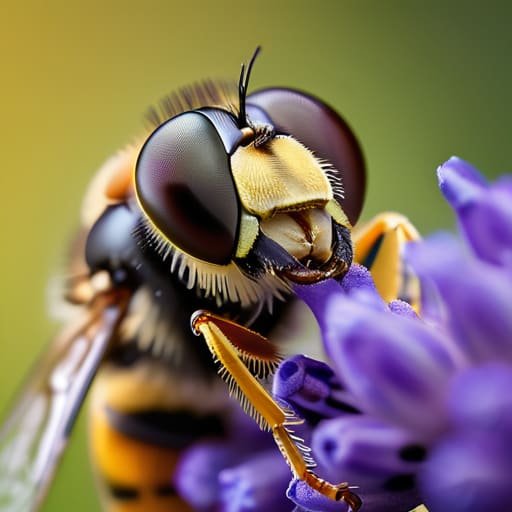
I was knee-deep in a damp hedgerow last Tuesday, squinting through a hand lens while my boots slowly succumbed to the mud, when a neighbor’s kid yelled from the fence that a “giant bee” was attacking his sunflower. I looked up to see a very confused, very harmless Episyrphus balteatus—a common marmalade hoverfly—just trying to have a snack. It’s this constant, frantic panic that gets to me; people see a flash of yellow and black and immediately go into “sting alert” mode. If you’re struggling with how to tell a bee from a hoverfly, please stop scrolling through those overly dramatic nature documentaries that treat every pollinator like a tiny, fuzzy landmine.
I’m not here to give you a twenty-point taxonomic checklist that requires a PhD to navigate. Instead, I want to show you the actual physical tells—the wing beats, the eye shapes, and the way they move—that will let you identify them in a split second without needing a microscope. We are going to look at what the surveys actually show us, stripping away the fear so you can start seeing the real diversity in your own garden.
Table of Contents
The Truth About Insect Mimicry Patterns
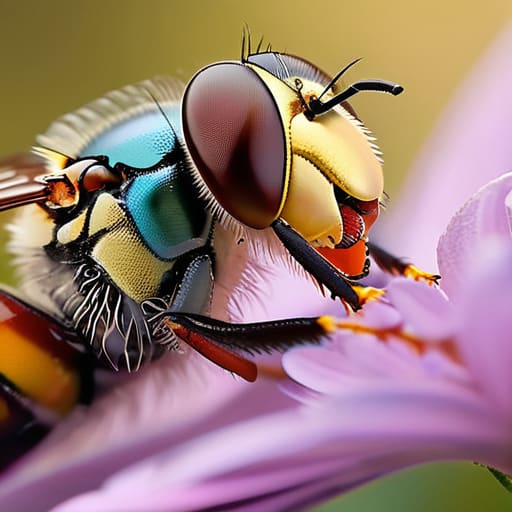
The reason this confusion happens isn’t just because we’re bad at looking closely; it’s because nature has spent millions of years perfecting a massive lie. We are looking at classic insect mimicry patterns in action. Specifically, many species of Syrphidae—the family that includes most of our common hoverflies—have evolved to look almost exactly like stinging Hymenoptera. It is a survival strategy: if you look like something that can sting you, most predators will decide you aren’t worth the trouble.
When I’m out on a transect, I have to train my eyes to ignore the “yellow and black” alarm bells and look for the structural tells. For instance, if you look at the hoverfly eye structure, you’ll notice they are massive, often taking up most of the head, which is a dead giveaway for a fly. Even if they have the right colors, they lack the specialized bee wing characteristics, like the specific venation patterns or the way the wings fold or move at rest. It’s a bit of a biological shell game, but once you stop looking at the “costume” and start looking at the anatomy, the difference between bees and hoverflies becomes much clearer.
Decoding Bee Wing Characteristics vs Fly Anatomy
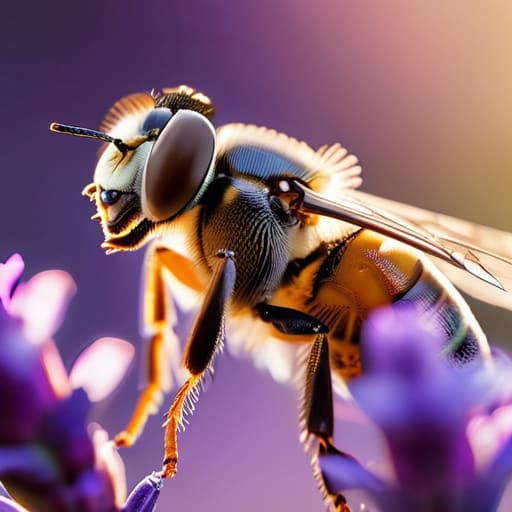
If you want to move past the “yellow and black equals bee” stage, you have to look at the wings. It’s the fastest way to spot the difference between bees and hoverflies when they’re darting around a patch of lavender. Most bees, particularly the Apidae family, have two sets of wings—forewings and hindwings—that are hooked together during flight to act as a single unit. When you’re looking at them under a hand lens, you’ll see a distinct, structural complexity.
Hoverflies, or Syrphidae, are much simpler. They are true flies, which means they only have one pair of functional wings. The second pair has evolved into tiny, knob-like structures called halteres that act like gyroscopes to help them hover with that eerie, stationary precision. If you see an insect that looks like it’s literally paused in mid-air before zipping away at a right angle, you aren’t looking at a bee; you’re looking at a fly that has mastered the physics of flight.
Five ways to stop confusing your pollinators
- Look at the eyes. If the insect looks like it’s wearing a pair of massive, wrap-around swimming goggles that cover most of its head, you’re looking at a member of the order Diptera—a fly. Bees have much smaller, more distinct compound eyes positioned on the sides of their heads.
- Check the wing count. This is the quickest way to settle an argument in the garden. Flies, including hoverflies, only have one pair of functional wings. Bees are Hymenoptera, meaning they have two pairs. If you see a tiny second pair of wings tucked behind the main ones, it’s a bee.
- Observe the waistline. Most bees have a distinct, narrow “wasp waist” (the petiole) between their thorax and abdomen. Hoverflies are built more like little flying cylinders; they lack that structural pinch and tend to have a much more streamlined, continuous body shape.
- Watch the flight path. If the insect is hovering with absolute, mechanical precision over a single flower—almost like a tiny, fuzzy helicopter—it’s likely a hoverfly. Bees are much more frantic and “clumsy” in their movement, often zig-zagging or landing with a heavy, purposeful thud.
- Examine the antennae. This is where my field surveys get tedious, but it’s the gold standard. Hoverflies have very short, stubby antennae that you might barely notice. Bees have much longer, more prominent antennae that they use to constantly “smell” their way through the hedgerow.
The Cheat Sheet for Your Next Garden Walk
Look at the eyes and the waist; if it has massive, wrap-around eyes and a single segment body, it’s a fly, even if it’s wearing a yellow-and-black “bee” costume.
Don’t panic if you see a hoverfly instead of a bumblebee; they are heavy-duty pollinators in their own right, and a garden full of them is a sign of a working ecosystem.
Stop trying to identify everything by color alone, because mimicry is a survival strategy, not a taxonomic guide—always check the wing venation or the way they hover if you want the real answer.
Beyond the Visual Checklist
At the end of the day, identifying these visitors comes down to looking past the obvious yellow stripes. Remember that while a bee’s heavy, pollen-laden body and double-winged structure are dead giveaways, the hoverfly is a master of the visual bluff, using a single pair of wings and those distinctive, bulging eyes to mimic a threat it doesn’t actually pose. It’s easy to get caught up in the “is it a bee?” panic, but once you start noticing the way a hoverfly hangs mid-air or the specific vein patterns in a wing, the confusion starts to fade. Accuracy matters because if we can’t correctly identify what is actually landing in our gardens, we can’t accurately track whether our conservation efforts are actually working.
I know it feels like we’re losing a battle when you see the decline in numbers during a transect walk, but please don’t let the complexity of insect taxonomy discourage you from looking closer. Whether you’re staring at a Bombus terrestris or a common syrphid fly, the simple act of observation is a form of stewardship. We don’t need everyone to be a professional entomologist to make a difference; we just need people to stop seeing “bugs” and start seeing the specific, incredible organisms that inhabit our margins. Observation is the first step toward protection, and honestly, the more you look, the more you’ll realize how much is actually still there, waiting to be noticed.
