I spent three years of my doctorate chasing Bombus terrestris through rain-soaked hedgerows, and if there is one thing I’ve learned, it’s that your data is only as good as your ability to actually record it without losing your mind. I see these beautiful, expensive leather-bound journals online, and people think they need to be amateur artists to start. They think they need a specific set of fine-liner pens or a degree in botanical illustration just to figure out how to keep a nature notebook that actually matters. Let me be clear: if you are waiting until you can draw a perfect, anatomically correct Lepidoptera to start writing, you are missing the point of the observation entirely.
I’m not here to sell you a lifestyle or a way to make your garden look like a curated museum exhibit. My goal is to show you how to build a record that actually tells a story—one that tracks what is actually happening in your patch of dirt, even if your handwriting is messy and your sketches look like potato shapes. I want to share the practical, slightly unglamorous reality of recording what you actually see, so you can move past the aesthetic pressure and start contributing something genuinely useful to your own understanding of the world.
Table of Contents
Moving Beyond Aesthetics With Real Scientific Observation Skills
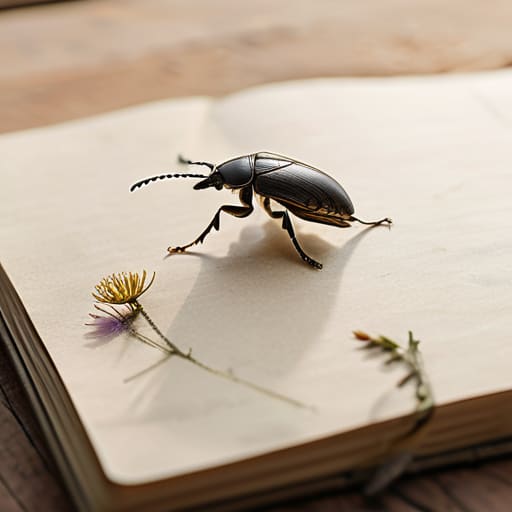
I spent my second summer of fieldwork staring at a patch of Cirsium arvense—creeping thistle—trying to figure out if a specific beetle was a resident or just passing through. It wasn’t pretty, and my sketches looked more like frantic scribbles than anything you’d see in a field guide. But here is the thing: you don’t need to be an artist to develop genuine scientific observation skills. If you spend your entire time worrying about whether your botanical illustration tips are being applied correctly, you’ll miss the moment the insect actually moves.
The goal isn’t to create a gallery of perfect specimens; it’s about capturing the context of what is happening. Instead of just drawing a flower, try to note the way the light hits the petals or, better yet, which specific insects are visiting it at 10:00 AM versus 2:00 PM. When you start observing wildlife patterns rather than just static objects, your notebook transforms from a scrapbook into a record of life. Even if your field notes for beginners are just a list of “three small brown moths on a white petal,” that’s a data point. And in ecology, data points are much more valuable than pretty pictures.
Essential Field Notes for Beginners Who Actually Want Data
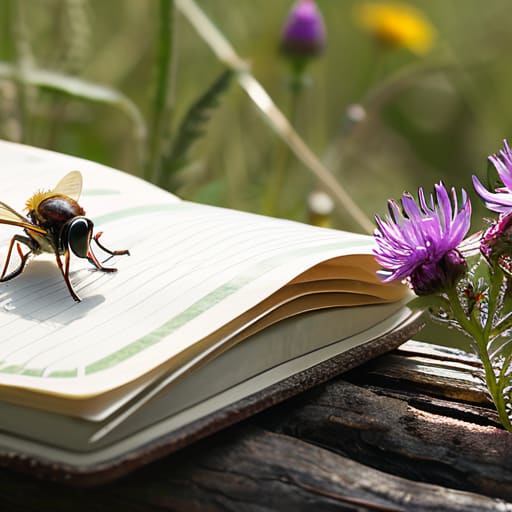
If you want your notebook to be more than just a collection of pretty leaves, you need to start recording the context. When I’m out on a transect, I’m not just looking at a bee; I’m looking at what that bee is doing and where it is. For anyone practicing field notes for beginners, this means noting the weather, the specific plant species involved, and the time of day. If you see a hoverfly, don’t just draw its stripes; note if it’s hovering over a knapweed or a dandelion. That distinction is the difference between a lovely sketch and a record that actually tells us something about resource availability.
Don’t feel pressured to master complex nature journaling techniques overnight. You don’t need a professional kit; a simple pencil and a waterproof pad are often better than expensive gear that feels too precious to get muddy. Focus on the “who, what, where, and when.” If you spot a pattern—like a specific moth appearing only after a heavy rain—write that down. It’s those small, repetitive details that eventually allow us to start observing wildlife patterns rather than just catching single, isolated moments.
Five Ways to Stop Treating Your Notebook Like a Scrapbook and Start Using It Like a Tool
- Prioritise the ‘when’ and ‘where’ over the ‘what’. I’ve seen notebooks filled with beautiful sketches of Bombus terrestris—the common bumblebee—that are practically useless because the author forgot to note that it was 14°C and raining sideways. Without the context of the weather and the specific habitat, you aren’t recording an ecological event; you’re just drawing a picture.
- Get comfortable with the “I don’t know” entry. If you see a moth and you can’t tell if it’s a Noctua pronuba or something else entirely, don’t guess. Write down “unidentified noctuid moth” and describe the wing pattern instead. In my PhD, a “maybe” is a liability, but a “not identified” is a valid piece of data that tells us what we still need to learn.
- Use a “rough and ready” system for quantities. You don’t need to perform a perfect census every time you step into the garden. If you see a cluster of aphids on a rose bush, don’t try to count every single one; just note if it’s a “sparse few” or a “dense colony.” We’re looking for trends over seasons, not a perfect headcount that will inevitably be wrong.
- Document the “boring” stuff, too. The presence of a specific weed or the fact that a hedge has been freshly trimmed is just as important as the rare beetle you happened to stumble upon. These are the variables that actually drive insect populations, and if you only record the “stars” of the show, you’ll miss the reasons why they showed up in the first place.
- Leave room for the “follow-up.” I always leave a margin or a blank page next to a significant sighting. If I find a particularly interesting specimen, I want space to come back two days later and note if it’s still there, or if it’s moved to a different host plant. Real ecology is about watching things change over time, not just capturing a single, frozen moment.
Three Things to Remember Before You Close Your Notebook
Prioritize accuracy over artistry; a messy, scribbled note about a specific wing pattern or a timestamp is infinitely more valuable to a conservationist than a beautiful but vague watercolor of a butterfly.
Context is everything, so never just record the “what”—always include the “where” and the “how,” such as whether the specimen was on a flowering bramble or just skittering across bare soil.
Accept the gaps in your knowledge, because noting that you “couldn’t identify the species” is a much more honest and useful piece of data than guessing and potentially polluting your own records with errors.
The Long Game of Looking
At the end of the day, a good nature notebook isn’t about having the most detailed sketches or the most expensive waterproof paper; it’s about the integrity of your observations. We’ve talked about moving past the urge to make everything look “pretty” and instead focusing on the raw data—the weather, the specific plant host, and the actual number of individuals you see. Whether you are recording a single Bombus terrestris on a clover stem or noting the arrival of a specific moth species at your garden trap, you are building a longitudinal record. This isn’t just a hobby; it is a way of documenting a changing world one page at a time, ensuring that your observations are grounded in what actually happened, rather than what you wished you had seen.
Don’t let the fear of “getting it wrong” stop you from opening the book. Even if you misidentify a beetle or forget to note the exact time, the act of consistent, intentional looking is what matters most. Science isn’t just something that happens in high-tech labs with expensive sensors; it happens in the margins of your garden and the damp corners of a hedgerow. By keeping these records, you are participating in something much larger than yourself. You are becoming a witness to the small, quiet shifts in our ecosystems, and that is the most important role any of us can play.
