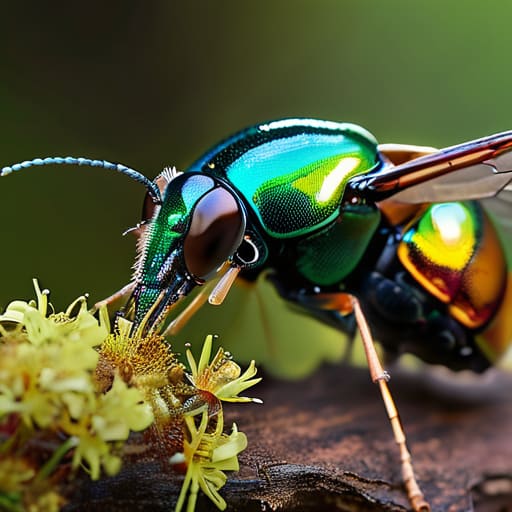
I was halfway through a transect in a rain-soaked field in Oxfordshire, shivering in my waterproofs and trying to distinguish a particularly nondescript hoverfly from a wasp, when it hit me: most people think “insect” is just a single, giant category of thing that buzzes. They see a bug, they panic, and they move on. But if you actually want to understand why a garden is thriving or failing, you have to stop treating them like a monolith and start looking at how insect orders differ in their actual roles. It isn’t just about whether they have wings; it’s about the fundamental evolutionary blueprints that dictate whether a creature is a master pollinator, a predator, or just a very efficient scavenger.
I’m not here to give you a dry, textbook lecture that reads like a PhD thesis written in a fever dream. Instead, I want to strip away the jargon and show you the real mechanics of these groups. We’re going to look at the specific traits that separate an order like Coleoptera from Hymenoptera, and I’ll tell you exactly why that distinction matters for your local biodiversity. No alarmist headlines, no impenetrable science—just the honest, messy reality of what’s actually crawling through the grass.
Table of Contents
Decoding the Taxonomic Classification of Insects
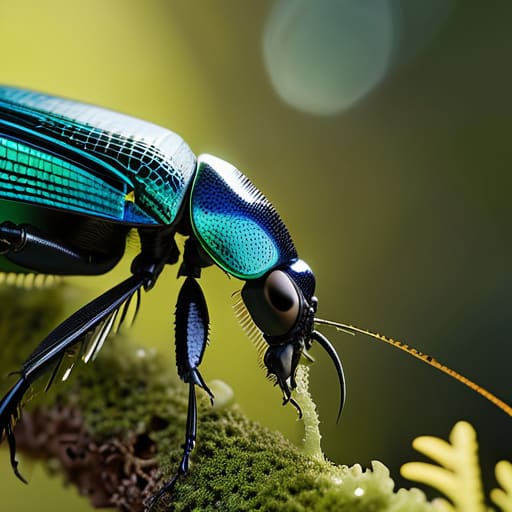
When I first started my fieldwork, I thought I could just look at a bug and “feel” what it was. I was wrong. Real identifying insect orders requires moving past the “vibes” and looking at very specific, often tiny, structural details. We aren’t just looking for “legs and wings”; we are looking at how those parts are engineered. For instance, the way a wing attaches to the thorax or the specific arrangement of bristles on a leg can be the only thing separating two entirely different evolutionary lineages.
This is where the taxonomic classification of insects actually becomes practical rather than just academic. It’s about observing insect morphological characteristics—like the presence of a sheath covering the antennae or the specific vein patterns in the wings—to place a specimen in its correct bucket. You have to be careful, though. A single specimen with a damaged wing can lead a beginner down a completely wrong path. It’s not about finding a perfect specimen every time; it’s about learning to recognize the underlying structural patterns that remain even when the insect is a bit battered from a night in a moth trap.
Why Identifying Insect Orders Requires More Than a Glance
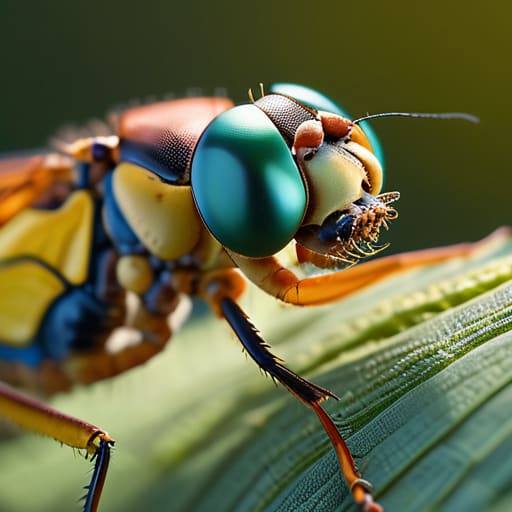
If you’ve ever stood in a damp field at dusk, squinting at a blur of movement, you know that a “bug” is rarely just a bug. The problem is that most people try to identify an insect based on a single, flashy trait—like bright colors or a massive stinger—and call it a day. But relying on a quick glance is how you end up misclassifying an entire family. Real identifying insect orders requires looking past the obvious and digging into the subtle, often frustratingly tiny details of their anatomy.
I spent three weeks of my first PhD year essentially learning how to look at things differently. You can’t just look at a wing; you have to look at the venation patterns within that wing. You can’t just look at legs; you have to examine the specific insect morphological characteristics that separate a true beetle from something that just happens to have a hard shell. It’s easy to get tripped up by convergent evolution, where two totally unrelated species evolve to look similar because they live in the same environment. If you aren’t looking at the fine-scale structural differences, you aren’t actually seeing the insect; you’re just seeing a costume.
How to actually tell them apart (without losing your mind)
- Look for the wings first, but don’t trust them immediately. While Coleoptera (beetles) are easy because of those hardened elytra, other orders like Diptera (flies) and Hymenoptera (bees, wasps, ants) can look suspiciously similar to a casual observer. You have to check if they have two wings or four.
- Pay attention to the mouthparts, not just the “vibe” of the insect. An insect might look like a predator, but if you look closely at the mandibles, you can distinguish between a predatory Neuroptera (lacewing) and something else entirely. The way they eat is a much more reliable evolutionary fingerprint than their colour.
- Stop grouping everything with long antennae into one category. I see this in the WhatsApp group all the time. Just because something has long feelers doesn’t mean it belongs to the same order; you need to look at the structural anatomy of the thorax and the abdominal segments to be sure.
- Don’t let a single “charismatic” species skew your data. If you see a massive Lepidoptera (moth or butterfly) and assume your garden is thriving, you’re missing the point. A healthy ecosystem is defined by the diversity across multiple orders, not just the one pretty one that landed on your sleeve.
- Learn to embrace the “I don’t know yet” phase. When I’m out on a transect and I see something that doesn’t fit the standard keys, I don’t force it into an order just to finish the spreadsheet. If the morphological markers aren’t clear, the honest thing to do is record it as an unidentified specimen rather than guessing and muddying the actual science.
What to actually remember about insect orders
Don’t mistake a single species boom for a healthy ecosystem; order-level diversity is a much more reliable indicator of whether your garden or field margin is actually functioning.
Classification isn’t just about naming things—it’s about understanding biological blueprints, like how wing structure or mouthparts tell us exactly what role an insect plays in the local food web.
Be skeptical of “insect decline” headlines that lump everything together, because a massive drop in one specific order often tells a much more nuanced and actionable story than a general headline ever could.
Beyond the Taxonomy
At the end of the day, understanding the differences between orders like Coleoptera or Lepidoptera isn’t just an academic exercise for people like me to do in rain-soaked fields. It is the foundational work required to see the forest—or rather, the hedgerow—for the trees. When we stop grouping every winged creature into a single, vague category of “bugs,” we start to see the specific ecological roles being played. We begin to realize that a sudden drop in Hymenoptera tells a very different story about landscape health than a decline in Diptera. Distinguishing these groups allows us to move past the generalized panic of headlines and toward data-driven conservation that actually addresses what is happening on the ground.
I know it can feel overwhelming, especially when the news cycle is constantly telling you that the world is ending in a cloud of wings. But there is a quiet power in looking closer. When you take the time to learn the difference between a beetle and a true bug, you aren’t just memorizing Latin names; you are learning the language of a complex, living system. If we want to save these populations, we have to start by actually seeing them for what they are. Once you move past the surface level, you realize that even the smallest, most overlooked order is a vital piece of the puzzle worth fighting for.
