
I once spent four hours hunched over a damp transect in a hedgerow near Leicester, squinting through a hand lens at a tiny, nondescript beetle while my boots slowly filled with freezing rainwater. I was convinced I had found something rare, only to realize I’d been misreading a dichotomous key for the better part of an hour because I’d skipped a single, crucial morphological trait. People often think learning how to use identification keys is about memorizing a list of Latin names or buying the most expensive, leather-bound field guide on the market, but that’s a total myth. It’s actually about disciplined observation and learning how to admit when you’re just guessing.
In this post, I’m stripping away the academic gatekeeping to show you how these tools actually work in the field. I won’t give you a lecture on taxonomic hierarchy, but I will show you how to spot the specific characters that matter and—more importantly—when to stop when the evidence is too thin to be certain. We’re going to move past the guesswork so you can build a dataset that actually means something.
Table of Contents
Moving Beyond Dichotomous Key Examples to Real World Accuracy
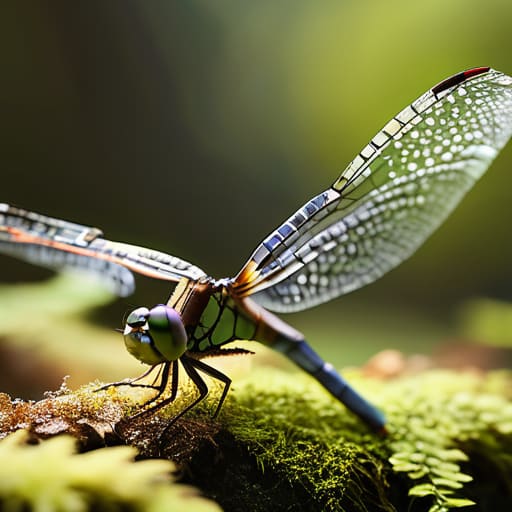
Most textbook dichotomous key examples assume you’re working under a perfect LED microscope in a sterile lab, but I’ve spent enough mornings in a damp field to know that reality is much messier. In a textbook, a trait is a clean, binary choice: “veins are branched” or “veins are parallel.” In the field, you’re often dealing with a specimen that has a slightly tattered wing from a narrow escape or a crushed thorax that makes observing specific morphological characteristics feel like a game of high-stakes guesswork. When the physical structure is compromised, the entire biological classification process can start to feel less like science and more like a series of educated stabs in the dark.
To get actual accuracy, you have to move past the “yes/no” logic of the page and start looking for consistent patterns. This means checking multiple features rather than banking everything on a single, potentially damaged trait. If you’re relying on one specific hair pattern on a leg to distinguish two moth species, but that leg is missing, you aren’t doing science; you’re just hoping for the best. Real taxonomic identification methods require a level of skeptical observation—you have to be willing to pause and say, “I can’t definitively confirm this trait,” rather than forcing a match just to finish the key.
Why Using Morphological Characteristics Requires More Than a Snapshot
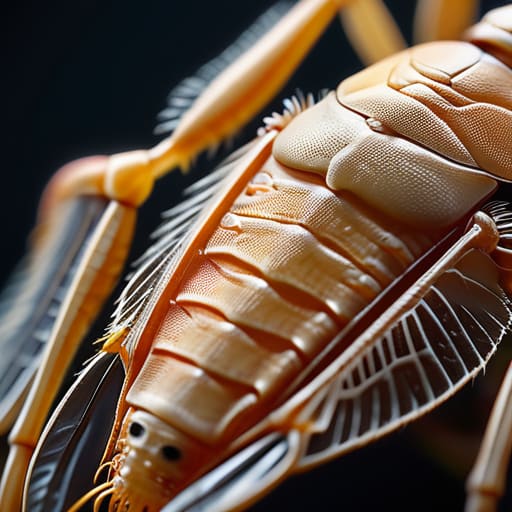
The problem with most people’s approach to using morphological characteristics is that they treat a living insect like a static JPEG. You see a flash of orange on a wing and think, “Right, that’s a specific species,” but morphology isn’t just about color. It’s about the subtle architecture of the body—the exact number of segments on a tarsus, the venation pattern in a wing, or the specific shape of a thorax. If you’re just glancing at a specimen through a phone lens, you’re missing the structural nuances that actually drive the biological classification process.
In my experience, especially when I’m out in a damp hedgerow at 11:00 PM, a single photo is rarely enough. You often need to physically manipulate the specimen—sometimes under a stereomicroscope—to see the traits that the keys are actually asking for. A snapshot captures a moment, but it doesn’t capture the diagnostic details. If you rely solely on a quick image, you aren’t performing true scientific identification; you’re just making an educated guess, and in conservation, those guesses are exactly what lead to “ghost populations” in our datasets.
How to actually use a key without losing your mind (or the data)
- Stop rushing the couplet. I see people jump through five steps in a dichotomous key because they think they recognize a wing pattern, but they haven’t actually checked the tibial spurs or the antennae structure. If you skip the physical check to satisfy your intuition, you aren’t using a key; you’re just confirming your own bias.
- Get a hand lens, not just a macro lens. A high-res photo of a Bombus terrestris is great for my Instagram, but it won’t help you distinguish subtle hair patterns or segment lengths that a reliable key requires. You need to see the physical architecture of the insect, not just its color palette.
- Respect the “not found” outcome. If you reach the end of a key and your specimen doesn’t match the description, don’t force it into the closest fit just to finish the task. That’s how we end up with “ghost species” in local datasets. If it doesn’t fit, it’s either a misidentification earlier in the process or something genuinely interesting that requires a specialist.
- Check the scale of the characters. A key might ask if a vein is “prominent” or “obscure,” which sounds subjective, but it’s actually measuring a ratio. Always have a millimeter scale or a clear reference point; “big” is a feeling, but “2.5mm” is a data point.
- Learn the terminology before you start the survey. If a key asks you to look for “scutellum” or “elytra” and you have to Google those terms mid-transect, you’re going to miss the window of light or the specific microhabitat you’re supposed to be sampling. Read the key’s glossary while you’re still drinking your coffee, not when you’re standing in a damp hedgerow.
The Reality Check: What to Carry Away from Your Transect
Stop treating identification keys like a multiple-choice quiz; they are tools for observation, not magic wands, and they only work if you actually pause to examine the specific morphological traits—like wing venation or tarsal claws—that the key is asking for.
Recognize that a single “match” isn’t the same as a confirmed sighting; if you haven’t accounted for the lighting, your angle, or the possibility of a sibling species that looks identical to the untrained eye, you’re just collecting beautiful guesses rather than actual data.
Embrace the “I don’t know” as a valid scientific result, because it is much better for long-term conservation to record a specimen as unidentified Lepidoptera than to confidently misidentify it and pollute the very datasets we rely on to track population declines.
The Reality of the Record
At the end of the day, an identification key isn’t a magic wand; it’s just a tool, and like any tool, it’s only as good as the person wielding it. We’ve talked about why you can’t just rely on a blurry photo or a quick glance at a wing pattern, and why moving past the simplified dichotomous “either/or” logic is the only way to get close to the truth. If you aren’t looking at the specific morphological traits the study actually measures—the venation, the tarsal claws, the subtle hair patterns—you aren’t really identifying anything, you’re just making an educated guess. Accuracy in the field is built on the boring, repetitive work of checking every single step of the key, even when you’re tired and the light is failing.
It might feel pedantic, but this level of precision is exactly what we need if we want to move the needle on conservation. We can’t protect what we can’t accurately name, and we can’t name things if our data is built on shaky foundations. When you take the time to do this properly, you aren’t just checking a box; you are contributing to a legitimate, evidence-based picture of how our ecosystems are actually functioning. So, keep your hand lens handy and don’t rush the process. The insects aren’t going anywhere, but our chance to understand them and help them depends entirely on how well we actually look.
