
I was standing in a muddy field in the Cotswolds last November, shivering under a waterproof jacket that had long since given up on being waterproof, trying to explain to a landowner why his “wild” patch of scrub was actually just a disorganized mess of invasive bramble. He kept throwing around terms he’d heard on a podcast, and it hit me then how much friction we create simply because we can’t agree on how rewilding is defined and argued in the first place. We treat it like a singular, magical concept—a sort of ecological reset button—when, in reality, the debate is a messy collision of different philosophies, from letting nature run entirely unchecked to highly managed corridors of connectivity.
I’m not here to sell you on a lifestyle brand or a utopian dream of a world without fences. My goal is to strip away the jargon and look at the actual mechanics of these different approaches. I want to walk you through the legitimate scientific tensions and the gaps where the evidence is still thin, so you can decide for yourself which version of rewilding actually moves the needle for the species we are trying to save.
Table of Contents
Rewilding vs Conservation Management Deciphering the Disconnect

The friction between rewilding and conservation management usually boils down to a disagreement over who—or what—should be in the driver’s seat. Traditional conservation management is, by its very nature, an act of curation. It’s the meticulous upkeep of a specific habitat to ensure a specific species, like a particular orchid or a rare butterfly, doesn’t blink out of existence. It’s predictable, it’s measured, and it’s often quite fragile. Rewilding, however, shifts the goalposts toward nature-led ecosystem recovery. Instead of managing for a single outcome, the idea is to step back and let the landscape find its own equilibrium, often by reintroducing key players to trigger trophic cascades and biodiversity shifts that we couldn’t possibly map out in a spreadsheet.
This is where the tension lives. When people talk about rewilding vs conservation management, they aren’t just debating techniques; they are debating the level of human interference we can justify. One side wants to protect the garden as it is; the other wants to let the garden become a forest, even if it means losing the very flowers we set out to save. It’s a messy, uncomfortable spectrum, and frankly, the evidence for which approach works best in fragmented landscapes is still far too thin to declare a winner.
Nature Led Ecosystem Recovery Where the Data Meets the Dream
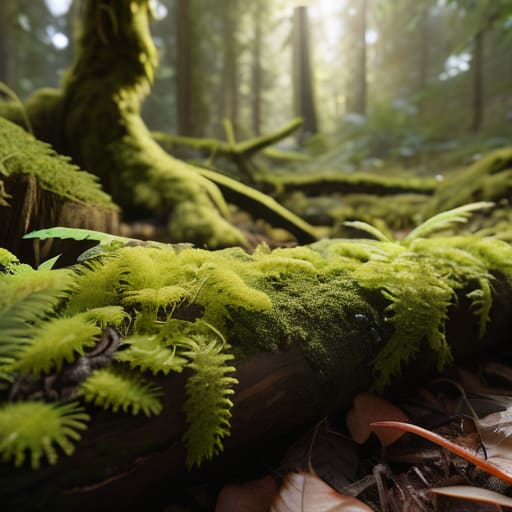
The dream of nature-led ecosystem recovery is often pitched as a hands-off paradise, but when you look at the actual datasets, the reality is far more granular. We talk about “letting nature take the wheel,” but nature doesn’t have a steering mechanism; it has feedback loops. In my own field surveys, I see this tension constantly. You can’t just walk away from a site and expect a balanced ecosystem to spontaneously manifest. We are looking for evidence of trophic cascades and biodiversity—the way a single predator or a specific type of soil disturbance can ripple through an entire food web—but those ripples are often slow, messy, and incredibly hard to track in a single season of data.
The gap between the “dream” and the “data” usually lives in the complexity of these ecological restoration approaches. It’s easy to photograph a charismatic megafauna species and call it a success, but it’s much harder to measure the subtle shift in invertebrate community structures that actually indicates a functioning system. We need to move past the aesthetic of wildness and start asking if these interventions are actually building resilient, self-sustaining networks or just creating high-maintenance scenic landscapes that happen to look unkempt.
Stop Using 'Rewilding' as a Catch-All: 5 Ways to Sharpen the Argument
- Distinguish between trophic rewilding and passive rewilding. If you’re talking about reintroducing apex predators to trigger a trophic cascade, say that. If you’re talking about letting a derelict lot grow over because you’ve run out of budget for mowing, call it passive restoration. Using one term for both makes it impossible to track whether your management goals are actually being met.
- Look past the “wilderness” trope. The term ‘wilderness’ implies a place untouched by humans, which is a romanticized myth that ignores the fact that most of our landscapes—including the hedgerows I spend my life surveying—are human-shaped. Arguing for rewilding shouldn’t mean arguing for the absence of people, but for the presence of ecological processes.
- Check the scale of the claim. A single garden being “rewilded” is a lovely sentiment, but in the context of landscape-scale ecology, it’s a different conversation entirely. When you’re arguing for policy changes, ensure you’re distinguishing between local habitat patches and the connected corridors required to actually support moving populations.
- Beware of the “naturalness” trap. There is a tendency to argue that something is “better” simply because it looks less manicured. As a researcher, I care less about whether a field looks “wild” and more about whether the invertebrate biomass is actually increasing. Don’t let aesthetic preferences masquerade as ecological evidence.
- Acknowledge the data gaps. It is tempting to argue that rewilding is a guaranteed win-win, but the long-term data on large-scale ecosystem shifts is still catching up to the enthusiasm. A strong argument doesn’t pretend we have all the answers; it identifies the specific ecological functions we are trying to restore and admits where the evidence is still thin.
The Bottom Line: Moving Beyond the Hype
We need to stop treating ‘rewilding’ as a binary choice between total human control and complete chaos; the real work lies in finding the specific, evidence-based middle ground where we step back just enough to let natural processes take the lead.
Success isn’t measured by how “wild” a landscape looks in a photograph, but by whether the specific ecological functions—like nutrient cycling or pollinator networks—are actually recovering according to the data.
Good conservation requires us to be comfortable with uncertainty, acknowledging that while we can’t predict every outcome of a nature-led recovery, we can certainly measure when a management strategy is failing to move the needle.
Moving Beyond the Debate
We’ve spent a lot of time untangling the semantics, but the takeaway is pretty clear: rewilding isn’t a single, monolithic way of doing things. It’s a spectrum that sits somewhere between the highly controlled, target-driven conservation we’ve practiced for decades and a more hands-off, process-led approach that trusts nature to find its own equilibrium. Whether we are debating the merits of trophic rewilding or arguing over the specifics of habitat connectivity, the core tension remains the same. We are trying to bridge the gap between human intention and ecological unpredictability. While the data on large-scale ecosystem recovery is still catching up to the rhetoric, we can’t let the lack of a perfect definition paralyze us. The goal isn’t to win an argument about terminology; it’s to figure out which interventions actually work at the scale we need them to.
Ultimately, the debate shouldn’t be about whether we “manage” or “let go,” but about how we create enough space for life to actually happen. I spend my days looking at the minute details of hedgerow margins, and if there is one thing the insects have taught me, it’s that they don’t care about our academic frameworks. They just need the resources, the connectivity, and the room to persist. If we can move past the buzzwords and focus on the measurable reality of biodiversity, we might actually stand a chance. Let’s stop arguing over the label on the box and start focusing on the life inside it.
