
I spent three weeks last summer standing in a waterlogged field in Shropshire, trying to count Bombus terrestris—the buff-tailed bumblebee—while my boots slowly turned into a swamp. It was during one of those miserable, shivering afternoons that I realized the massive disconnect between the muddy reality of fieldwork and the polished spreadsheets used in government offices. We often hear that how policy targets are set is this seamless, high-level process of scientific consensus, but from where I’m standing, it feels a lot more like trying to build a skyscraper on top of a shifting sand dune. Most of these targets aren’t born from counting individual bees in the rain; they are often just arbitrary numbers plucked from models that haven’t been stress-tested by anyone who actually knows how hard it is to find a single specimen in a hedgerow.
I’m not here to give you a lecture on bureaucratic frameworks or to pretend that every government mandate is a masterpiece of precision. Instead, I want to pull back the curtain on the messy, often flawed reality of how these benchmarks are actually constructed. I’ll show you where the data is solid and, more importantly, where the evidence is thin, so you can see through the headlines and understand what is actually happening on the ground.
Table of Contents
The Messy Reality of Science Based Target Setting

The problem with science-based target setting is that “science” isn’t a monolith that hands down a single, perfect number to a politician. In my fieldwork, I see how messy the data actually is. You can have a thousand transect counts, but if they were all done on sunny Tuesdays in July, they don’t represent the reality of a species’ population. When we try to translate this into environmental policy frameworks, we run into a massive gap between a biological reality and a legislative deadline. We aren’t just trying to track a species; we are trying to turn fluctuating, noisy data into a hard line that a government can be held to.
This is where the friction starts. Most biodiversity conservation goals are built on models—mathematical guesses about where a population should be—rather than what I’m actually seeing in the hedgerows. If the model says a species is recovering but my moth trap is coming up empty, we have a crisis of measurement. We have to decide if we are chasing a theoretical ideal or if we are actually measuring policy effectiveness through the lens of what is happening on the ground.
Why Measuring Policy Effectiveness Requires More Than Just Hope
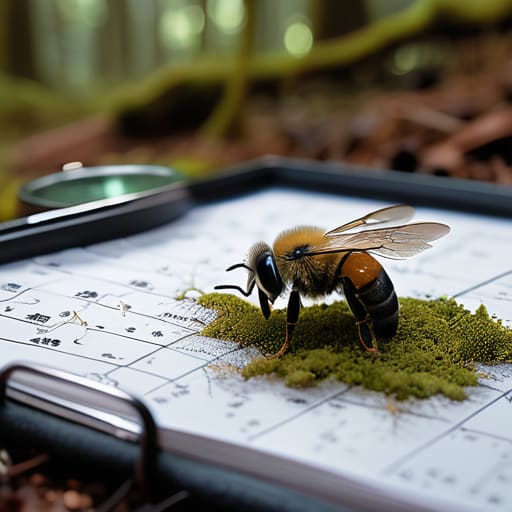
The problem with most biodiversity conservation goals is that they are often built on a foundation of “vibes” rather than actual data. We see a headline about a new land-management scheme and assume, because the language is optimistic, that the species numbers are ticking upward. But hope isn’t a metric. In my fieldwork, I’ve seen plenty of well-intentioned projects fail simply because nobody defined what “success” actually looked like on the ground. If a policy says we want to increase pollinator abundance but doesn’t specify which taxa we are monitoring or how often, we aren’t actually managing anything—we’re just watching a slow decline with a better soundtrack.
Measuring policy effectiveness requires us to move past these vague aspirations and look at the granular reality of science-based target setting. It’s not enough to say we want “more nature”; we need to know if a specific intervention in a hedgerow margin actually translates to a measurable increase in biomass or reproductive success. Without that rigorous loop, we risk pouring resources into frameworks that look great in a briefing note but do absolutely nothing for the actual insects.
Five Reality Checks for When Targets Meet the Real World
- Stop chasing “easy” metrics. It is tempting to set a target based on something simple to count, like the number of hectares of wildflower meadow planted, but that’s a proxy, not a result. A field of planted flowers that no pollinators actually visit is just expensive landscaping; we need to set targets for the biological outcomes—the actual presence of the species—not just the surface area.
- Account for the “noise” in the data. In my fieldwork, I know that a bad summer or a particularly wet June can make it look like a population has crashed when it’s actually just hiding. Policy targets need to be robust enough to distinguish between a genuine ecological decline and the natural, messy fluctuations that happen in any living system.
- Build in a buffer for scientific uncertainty. I’ll be the first to tell you when the evidence is thin, and policy should reflect that. If we set a target based on a single, massive study that hasn’t been replicated, we’re building a house on sand. Good targets acknowledge what we don’t know yet and allow for adjustment as the data matures.
- Prioritize longitudinal data over snapshots. A one-off survey is a snapshot, not a trend. You can’t set a meaningful five-year recovery target if you only have one year of baseline data to work from. We need to demand that policy targets are grounded in multi-year monitoring cycles that actually capture how populations move through time.
- Connect the target to the actual mechanism of change. If a target is “increase butterfly numbers by 20%,” but the policy only addresses land use without addressing pesticide drift or habitat fragmentation, the target is a fantasy. A target is only useful if it is directly tied to the specific levers we are actually pulling on the ground.
The Bottom Line: What Actually Matters for Conservation
We have to stop confusing “presence” with “population health”; just because you see a single Bombus terrestris in your garden doesn’t mean the local ecosystem is thriving, and our policy targets need to reflect that distinction.
Good targets require a tolerance for messy, incomplete data, because waiting for “perfect” scientific certainty before setting a goal is just a polite way of letting a species go extinct while we argue over the decimal points.
Real progress is measured by long-term trends in field surveys, not by the number of shiny, high-level commitments made in a boardroom that lack a clear mechanism for measuring actual insect abundance on the ground.
Beyond the Spreadsheet
At the end of the day, setting a policy target isn’t just a mathematical exercise; it is an admission of what we value and what we are actually willing to track. We’ve seen that moving from a vague ambition to a measurable goal requires navigating the friction between messy, real-world field data and the clean, decisive lines of a legislative mandate. If we rely on proxy metrics that look good in a report but don’t actually reflect what’s happening in a hedgerow or a meadow, we aren’t succeeding—we are just polishing the data. Effective policy requires the humility to acknowledge that our measurements are imperfect and the rigor to ensure those imperfections don’t mask a systemic failure to protect biodiversity.
We don’t need more “aspirational” targets that vanish the moment they encounter a budget cut or a complicated survey season. We need targets that are grounded in the reality of the soil, the weather, and the actual species we are trying to save. It is easy to feel overwhelmed by the scale of the decline, but there is a quiet power in getting the numbers right. When we demand better metrics, we aren’t just being pedantic; we are making sure that when we finally say we have turned the tide, we are telling the truth.
