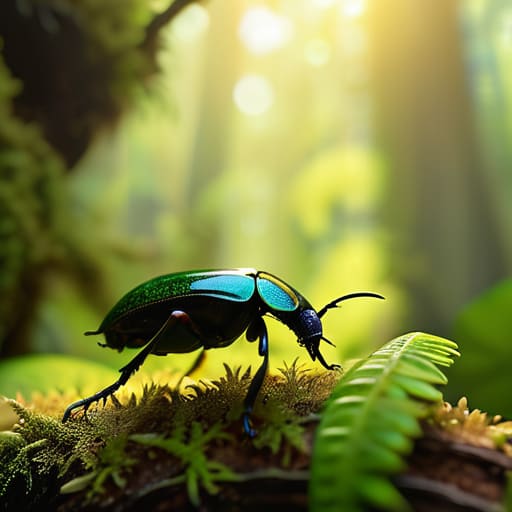
I spent three hours last Tuesday crouched in a damp hedgerow, staring at a patch of bramble through a hand lens, trying to figure out why one specific colony of Bombus terrestris—the buff-tailed bumblebee—was being pushed to the absolute edge of the patch by a more aggressive newcomer. It wasn’t some grand, cinematic battle for dominance like you see in nature documentaries; it was just a messy, exhausting scramble for the best nectar. We often talk about how competition shapes communities as if it’s this elegant, mathematical formula driving evolution, but when you’re actually out in the mud, it looks a lot more like organized chaos.
I’m not here to give you a lecture on theoretical population models that only make sense in a PhD seminar. Instead, I want to look at what the survey data actually tells us about how species fight for space, food, and survival in the real world. We’ll move past the sensationalist headlines and look at the actual mechanics of these interactions, from the garden border to the field margin. I’ll show you where the evidence is solid and where we’re still mostly just guessing, so you can understand the true complexity of the tiny worlds around us.
Table of Contents
Ecological Niche Partitioning and the Reality of Shared Space
When we talk about species living side-by-side, the textbook definition of ecological niche partitioning often makes it sound like a polite, choreographed dance. The theory suggests that species evolve to use different parts of a resource—one bird eats the seeds at the top of the canopy, another takes the ones on the ground—to avoid a direct fight. But when I’m out on a transect, it looks a lot less like a dance and more like a series of calculated, messy compromises. It isn’t always about elegant specialization; often, it’s just about finding a gap in the schedule or a patch of clover that everyone else has overlooked.
In reality, the evolutionary biology of community structure is driven by how much “room” there actually is. If you have a massive, reliable source of nectar, you’ll see a huge variety of pollinators overlapping in the same space because the cost of fighting is higher than the benefit of sharing. But when things get tight, that’s when you see the real shifts. You start seeing species physically move their activity to different times of day or different heights in the hedgerow just to stay out of each other’s way. It’s less about “choosing” a niche and more about the sheer necessity of not getting squeezed out.
Evolutionary Biology of Community Structure vs Media Myths
The problem with how we talk about competition is that the media loves a zero-sum game. You see headlines claiming one species is “invading” or “dominating,” as if nature is just one long, dramatic battle royale. But when you actually dive into the evolutionary biology of community structure, the reality is far less cinematic and much more about math. It isn’t always about a winner taking all; it’s about how species fine-tune their biology to avoid direct, costly confrontation.
In my own fieldwork, I see this constantly. It’s rarely a frantic fight; it’s a slow, quiet adjustment of when and where an organism exists. We often hear about the “struggle for existence,” which sounds like a heavy metal album cover, but in practice, it’s more about the subtle impact of scarcity on community cohesion. Instead of constant fighting, species often evolve to occupy different temporal or spatial windows to minimize overlap. We shouldn’t mistake these complex, long-term evolutionary adaptations for the sudden, violent clashes that make for a good clickbait headline.
Field Notes: How to Actually Read a Competitive Landscape
- Stop looking for “wars” and start looking for “shifts.” When we see one species decline while another rises, the media calls it a battle for dominance. In my surveys, it usually looks more like a subtle reshuffling—species aren’t necessarily fighting to the death; they are just moving into the gaps left when a specific resource, like a particular flowering hedge, becomes unavailable.
- Resource availability is the real conductor of the orchestra. You can talk all you want about the “inherent competitiveness” of a species, but if you add a patch of clover to a field margin, the competitive tension often drops. Competition isn’t a fixed personality trait of a bug; it’s a reaction to how much food and space is actually on the table.
- Watch the timing, not just the players. We often overlook temporal partitioning—the way species avoid direct conflict by simply being awake at different times. A moth and a bee might “compete” for the same nectar, but if one is out at dawn and the other at dusk, the competition is practically a non-issue. It’s about the schedule, not just the hunger.
- Beware the “Generalist Trap” in your data. It is tempting to say a generalist species is “winning” because it’s everywhere, but that’s a lazy way to read a transect. Often, a generalist is just filling the voids left by specialists that have lost their specific niche. Being widespread isn’t always a sign of superior competition; sometimes it’s just a sign of being able to survive on scraps.
- Look for the “micro-niches” that the big studies miss. A single hedgerow isn’t just one habitat; it’s a thousand tiny different environments depending on the soil moisture or the shade of a specific bramble. Most community structure is shaped by these tiny, granular differences that allow species to coexist side-by-side without ever actually bumping into one another.
What the Field Data Actually Tells Us
Competition isn’t always a dramatic, winner-takes-all battle; more often, it’s just a series of subtle adjustments where species shift their timing or preferred plant species to avoid direct collision.
We need to stop treating “niche” as a fixed, tiny box and start seeing it as a flexible set of behaviors that allow diverse communities to coexist in even the messiest hedgerow margins.
When headlines claim a species is being “driven out” by a competitor, look closer at the survey methods—often, what looks like displacement is actually just a population responding to changes in habitat structure or food availability.
Moving Beyond the Battleground Metaphor
When we strip away the sensationalist headlines about “wars” in the insect world, what we’re actually left with is a complex, granular map of how species negotiate their existence. We’ve seen that community structure isn’t just about one species winning and another losing; it’s about the subtle, often invisible ways organisms partition resources to avoid direct conflict. Whether it’s through shifting activity times or specializing in a specific flower’s nectar depth, these interactions are less about combat and more about finding a way to coexist within the limits of a landscape. The data shows us that stability comes from these tiny, specialized niches, not from a single dominant player sweeping the board.
If there is one thing I’ve learned from spending my mornings knee-deep in damp hedgerows, it’s that we cannot protect what we don’t bother to understand. If we keep viewing nature through the lens of “survival of the fittest” as a violent struggle, we miss the importance of the structural complexity that allows biodiversity to actually thrive. We need to stop looking for the winners and losers and start looking at the connective tissue of the ecosystem—the messy, overlapping spaces that keep everything running. If we can manage our gardens and fields to provide that variety of niche space, we aren’t just preventing a collapse; we are actively facilitating the intricate dance that makes life possible.
