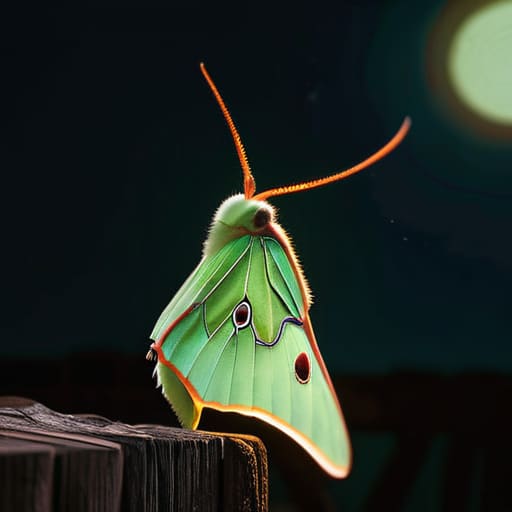
Last Tuesday, I was out in my parents’ garden with a sheet and a UV light, waiting for the usual suspects to show up, when I realized I couldn’t see a single moth. Instead, I just saw a frantic, disorganized cloud of tiny insects battering themselves against the neighbor’s high-intensity LED security floodlight. It’s one of those moments where the science hits you physically; you realize that the debate over how light pollution affects insects isn’t just about some abstract loss of “dark skies,” but about the literal exhaustion of individual lives. We see these massive, terrifying headlines claiming that artificial light is a total extinction driver, but the truth is often more about disrupted rhythms and energy depletion than a sudden, total wipeout.
I’m not here to sell you on a doomsday scenario or tell you that you need to live in a cave to save the planet. My goal is to look at what the survey data actually tells us about nocturnal behavior and help you understand which lighting choices actually matter for your local biodiversity. I’ll tell you when the evidence is solid and when we’re still just guessing, so you can make changes that genuinely move the needle.
Table of Contents
Understanding Phototaxis in Insects Without the Sensationalism
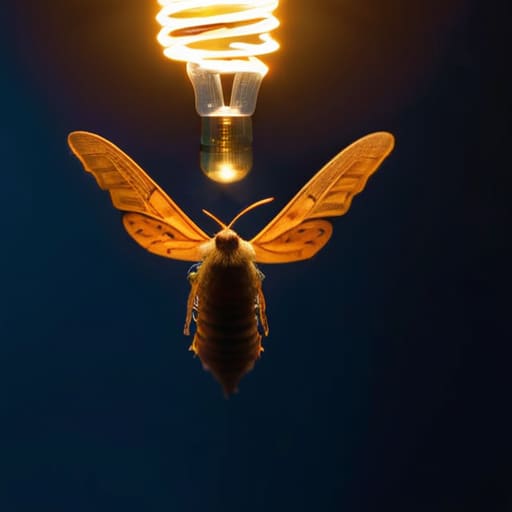
When we talk about bugs being “drawn to the light,” we are usually referring to phototaxis in insects. It sounds simple, almost like a magnetic pull, but the biological reality is more complex than a moth just being “confused.” For many species, particularly those using celestial cues for navigation, artificial light at night (ALAN) acts as a massive sensory disruptor. It isn’t just that they are wandering aimlessly; it’s that the light creates a functional barrier, pulling them away from their natural foraging or mating grounds and trapping them in a cycle of exhaustion around a single bulb.
I often see people frame this as an immediate death sentence for every species, but we have to be careful with that level of certainty. While we know that constant exposure can lead to significant physiological stress, the impact varies wildly depending on the insect. For some, it’s a minor nuisance; for others, it’s a driver of nocturnal ecosystem disruption that can ripple through the entire food web. We aren’t just looking at “lost bugs,” but at a fundamental shift in how these organisms interact with their environment once the sun goes down.
Why Alan Is More Than Just a Distraction
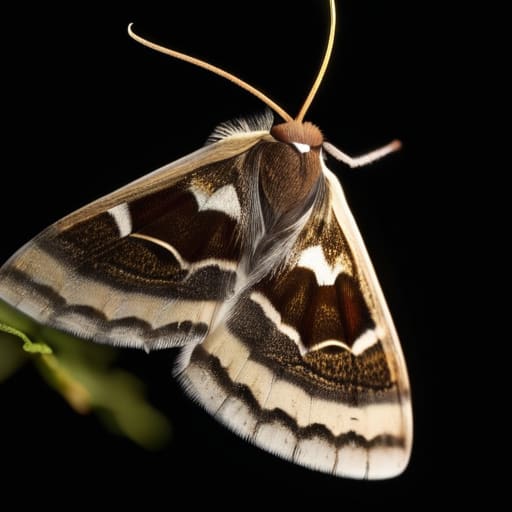
It’s easy to picture a moth circling a bulb and think, “Well, at least it’s not dead yet.” But the problem with artificial light at night (ALAN) isn’t just that it’s a shiny distraction; it’s that it fundamentally rewires how an organism interacts with its environment. When an insect is stuck in a death spiral around a porch light, it isn’t just wasting energy. It is effectively being removed from its ecological role. For a nocturnal specialist, that light acts as a sensory trap, creating a massive gap in the local food web.
This is where we start seeing real nocturnal ecosystem disruption. If the pollinators are too busy fighting a LED streetlamp to visit the evening-primrose, the plants don’t get fertilized, and the cycle stalls. We aren’t just looking at individual bugs acting weirdly; we are looking at a breakdown of timing. Even if they don’t fly directly into the light, the mere presence of it can cause a disruption of circadian rhythms, messing with the hormonal cues that tell an insect when to feed, when to mate, and when to rest. It’s a subtle, cumulative tax on their survival.
Small Shifts: What Actually Works for Your Garden
- Swap out the cool-white LEDs for warmer tones. When I’m out doing transects at night, I notice that the high-blue-content lights—those crisp, clinical whites—seem to draw way more activity than the amber or warm-yellow ones. It isn’t just about aesthetics; lower color temperatures are generally less disruptive to the biological rhythms of the insects we’re trying to protect.
- Direct your light downwards. A lot of the light pollution we talk about is actually just “spill”—light that’s supposed to be illuminating your garden path but ends up bleeding into the hedgerow or the sky. Using shielded fixtures that point the light exactly where you need it, rather than letting it scatter, makes a massive difference to the local micro-habitat.
- Use motion sensors instead of constant illumination. Most of us don’t actually need our side gates to be lit up at 3:00 AM on a Tuesday. By switching to motion-activated lighting, you give the local nocturnal community a reprieve. They get the darkness they need for foraging and mating, and you still get the security of light when you actually walk through the door.
- Focus on the “edge” habitats. If you have a garden, the most critical area isn’t the middle of your lawn; it’s the boundary where your property meets the hedge or the fence. This is where the pollinators move. Keeping the lighting minimal or very low-intensity along these margins helps maintain the “dark corridors” that many species rely on to move through a fragmented landscape.
- Don’t just look at the bugs; look at the plants. Light pollution can mess with the phenology—the timing—of flowering plants, which in turn affects the insects that rely on them. If you’re choosing plants for a lit area, go for those that are robust and provide high-quality nectar, but remember that no amount of planting can fully offset a garden that’s essentially a permanent disco.
What This Actually Means for Your Garden
It isn’t just about bugs being “confused” by a bulb; we have to look at the energy costs. When a moth spends four hours circling a security light instead of feeding or mating, that is a direct hit to their reproductive success that shows up in the next generation’s numbers.
We need to move past the idea that all light is equally bad. The data suggests that spectrum matters—switching from broad-spectrum white LEDs to warmer, amber tones can significantly reduce the “vacuum effect” that pulls insects out of their natural habitats and into our lit-up suburbs.
Small-scale changes are more effective than grand gestures. You don’t need to live in total darkness to help; using motion sensors, shielding your fixtures so light points down rather than up, and simply turning off non-essential lights at night creates the dark corridors that pollinators actually need to move through a landscape.
Beyond the Glow
To wrap this up, we have to stop treating light pollution as a singular, apocalyptic event and start seeing it as a specific, measurable disruption to biological rhythms. We’ve looked at how positive phototaxis isn’t just a “bug hitting a bulb” problem, but a systemic issue that fragments habitats and skews the data in our long-term surveys. Whether it is the disruption of reproductive cycles or the sheer energy cost of being drawn away from a host plant, the impact is real, even if it isn’t always as dramatic as a headline suggests. The goal isn’t to live in total darkness, but to recognize that unfiltered, high-intensity light is an ecological variable that we have been treating as a constant for far too long.
If you want to help, don’t just feel guilty about your garden setup; get practical. Switch to warm-spectrum LEDs, use shields to direct light downwards, and—if you can—turn things off during those peak emergence windows I spend my nights tracking. We don’t need more panic; we need targeted, evidence-based changes to our local environments. Every lumen we save and every shadow we restore is a tiny victory for the species that rely on the dark to survive. It turns out that sometimes, the best way to support biodiversity is simply to let the night be dark again.
