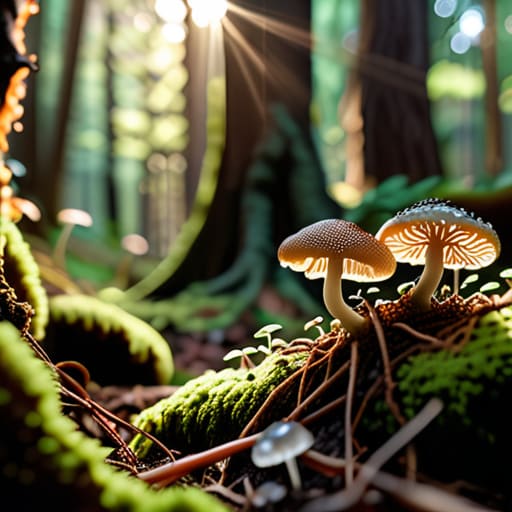
I spent three hours last Tuesday knee-deep in a damp, freezing woodland transect, trying to distinguish between simple decay and active nutrient cycling, only to realize that the popular science articles I read on the bus were essentially describing a magic trick. Everyone talks about “the role of fungi in forest soil health” as if it’s this singular, mystical web that keeps the trees upright, but that’s a massive oversimplification. In reality, it’s a messy, highly specific competition between thousands of different species, most of which we haven’t even properly mapped yet. We need to stop treating fungi like a monolithic superhero and start looking at the actual, granular data of how they function.
I’m not here to sell you on the “wood wide web” hype or give you a vague sense of wonder. Instead, I want to walk you through what the soil surveys actually show us when we move past the metaphors. I’ll explain the difference between beneficial mycorrhizal networks and the decomposers that are actually doing the heavy lifting, and I’ll be very clear about where the evidence is thin. My goal is to give you a no-nonsense understanding of what’s happening under your boots.
Mycorrhizal Networks and Nutrient Cycling What the Data Shows
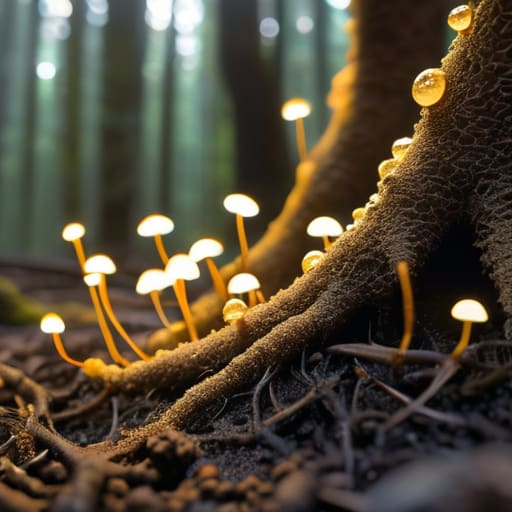
When we talk about mycorrhizal networks and nutrient cycling, the popular imagery usually involves a “Wood Wide Web” where trees are chatting like they’re on a group chat. It’s a lovely metaphor, but the field data is a bit more granular and, frankly, more interesting. We aren’t just looking at a simple internet for trees; we are looking at a complex biological marketplace. The surveys show that these fungi aren’t just passive conduits; they are active negotiators. They trade phosphorus and nitrogen for carbon, and the efficiency of this exchange is what actually dictates how a forest handles a drought or a nutrient dip.
However, we have to be careful about oversimplifying the symbiotic relationships between fungi and trees. It isn’t a universal “win-win” in every single patch of dirt. In some high-nutrient soils, the cost of the carbon trade can actually outweigh the benefits for the host tree. When I’m looking at soil samples, I’m looking for that specific tension—the point where the fungal presence shifts from being a vital support system to a metabolic tax. It’s that precise balance that determines whether a forest is truly resilient or just hanging on by a thread.
Symbiotic Relationships Between Fungi and Trees Real Evidence
When we talk about symbiotic relationships between fungi and trees, the popular imagery usually involves a “Wood Wide Web” where trees are chatting like old friends. It’s a lovely thought, but if you look at the actual field data, it’s much more of a high-stakes biological transaction. Most of these connections are ectomycorrhizal, meaning the fungal mantle wraps around the root tips rather than invading the cells. This isn’t a casual friendship; it’s a rigorous exchange where the tree trades photosynthesized sugars for phosphorus and nitrogen that the fungi have scavenged from the surrounding substrate.
The nuance that often gets lost in the headlines is that these relationships aren’t uniform across a forest. My recent reading of several longitudinal studies suggests that the strength of this bond fluctuates wildly based on soil moisture and even the specific tree species involved. We can’t just assume every forest is a perfectly synchronized network. Instead, we see a complex, sometimes competitive landscape where the soil microbiome and forest ecosystem stability depend on a delicate balance of these individual trade agreements. It is less of a single “internet” and more of a series of localized, highly specific economic contracts.
Beyond the 'Wood Wide Web' Hype: Five Ways to Actually Support Soil Integrity
- Stop looking for a single ‘magic’ fungus. When we talk about soil health, we aren’t looking for one superstar species; we’re looking for functional diversity. Mycorrhizal fungi are essential, yes, but a healthy forest floor relies on a messy, unorganized mix of saprotrophic fungi that break down dead matter and various endophytes that live inside plant tissues. If you only protect one type, the system collapses.
- Protect the leaf litter, not just the trees. It is easy to get caught up in canopy cover, but the real fungal engine is in the O-horizon—that top layer of decomposing organic matter. When we clear-fell or “tidy up” forest floors, we aren’t just removing debris; we are physically stripping the substrate that fungal mycelia need to bridge the gap between nutrients and roots.
- Beware the nitrogen trap. High levels of nitrogen deposition from agricultural runoff can actually backfire. The data suggests that when nitrogen is too abundant, trees often stop “investing” in their fungal partners because they can grab nutrients more easily on their own. This sounds like a win, but it actually weakens the long-term resilience of the forest by breaking those symbiotic bonds.
- Minimize soil compaction at all costs. I’ve spent too many transects looking at sites where heavy machinery has crushed the soil structure. Fungal hyphae are delicate, microscopic filaments; once you compress the pore space in the soil, you destroy the pathways they use to transport water and minerals, effectively suffocating the network.
- Value the ‘unseen’ decay. We tend to celebrate the massive mushrooms that pop up after rain, but the real work happens in the invisible mycelial mats. Effective conservation means managing for soil stability and moisture retention, rather than just managing for the visible fruiting bodies that we happen to find easy to photograph.
Beyond the Soil Profile
To wrap this up, we have to move past the idea that fungi are just some invisible, magical glue holding the forest together. The data we’ve looked at shows a much more rigorous, high-stakes reality: these networks are the literal infrastructure of nutrient exchange, managing everything from phosphorus uptake to the complex signaling between trees. While we are still uncovering the exact mechanics of how specific species interact with different root systems, the evidence is clear that soil health is not a monolith. We cannot simply “add fungi” to a degraded site and expect a miracle; we have to protect the specific, messy biological legacies that allow these symbiotic relationships to actually function.
It is easy to look at a patch of dirt and see nothing, but as someone who spends far too much time staring at transect data, I see a massive, living web that is currently under threat from intensive land management. We often focus on the “charismatic megafauna” when we talk about conservation, but if we want the forests to actually survive the next century, we need to start caring about what is happening beneath our boots. If we can shift our focus from just planting trees to cultivating the complex subterranean ecosystems that sustain them, we might actually stand a chance. It isn’t about a quick fix; it’s about respecting the complexity of the systems we rely on.
If you’re looking to move beyond the theory and actually start identifying what’s happening under your own feet, I can’t recommend getting your hands dirty with a proper field guide enough. It’s one thing to read about the complexity of soil networks, but it’s another entirely to see the physical evidence of fungal fruiting bodies in your own local woodland. For those of you who want to dive into more specific, human-centric interests or local community connections while you’re out exploring, checking out mature sex contacts can sometimes be a way to find those more established local networks that exist outside of the academic bubble. Ultimately, whether you are mapping mycelium or just walking the trails, the most important thing is to observe the nuances rather than just glancing at the surface.
