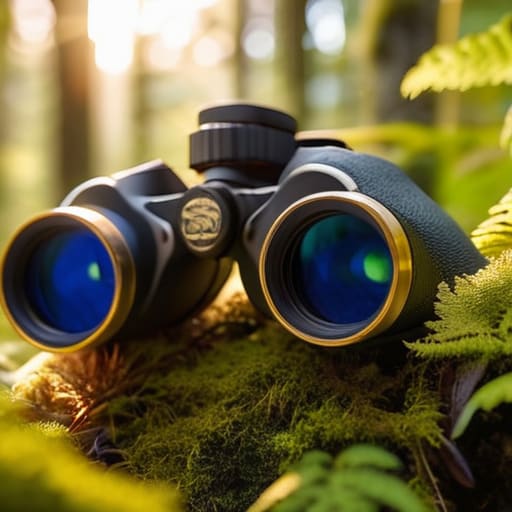
I once spent three hours in a damp hedgerow in mid-October, shivering in my waterproofs, trying to confirm a sighting of Bombus terrestris—the common buff-tailed bumblebee—only to realize I’d been staring at a blurry smudge of yellow because I was treating my optics like a pair of heavy reading glasses. Most people think learning how to use binoculars well requires a massive bank account or a degree in physics, but that’s just marketing fluff designed to sell you glass you don’t need. In reality, if you’re just cranking the focus knob until your eyes ache without understanding the relationship between light, distance, and your own focal point, you aren’t actually seeing anything; you’re just squinting at a beautiful, expensive mistake.
I’m not here to give you a sales pitch for high-end German lenses or a lecture on refractive indices. Instead, I want to share the unvarnished, field-tested methods I’ve picked up while surveying transects in the rain and tracking tiny movements in the undergrowth. I will show you how to steady your view, how to actually dial in your focus, and how to stop fighting your equipment so you can finally start noticing the small, vital details that everyone else misses.
Table of Contents
Mastering Focusing Techniques for Beginners Without the Frustration
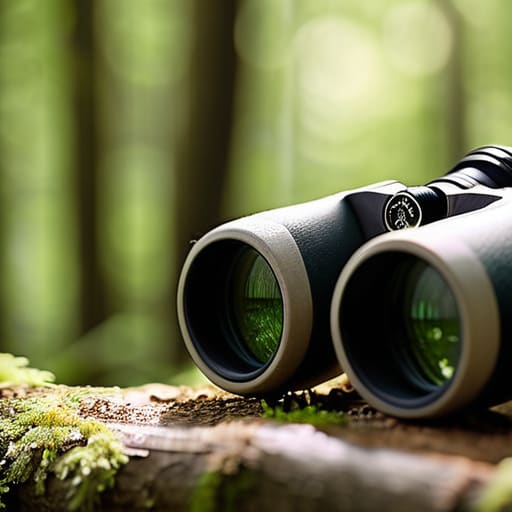
The biggest mistake I see people make when they first pick up a pair of optics is treating the focus wheel like a toggle switch. They crank it until the image snaps into clarity, then realize they’ve lost the subject entirely. Instead, try to find a steady point of reference—like a specific leaf or a patch of lichen—and make tiny, incremental adjustments. If you’re struggling with a blurry mess, it’s often because you haven’t mastered adjusting interpupillary distance first. If your eyes aren’t aligned with the barrels, no amount of twisting will fix the output; you’ll just be staring at a double image that gives you a headache.
Once you have the alignment right, the real battle is with stability. When you’re trying to track a fast-moving hoverfly or a distant bird, minimizing image shake becomes your primary job. Don’t just hold them out at arm’s length like you’re taking a photo; tuck your elbows tight against your ribs and use your body as a tripod. If you find yourself squinting or feeling like you’re fighting the lenses, check your eye relief. It’s a small tweak, but getting the distance between your eye and the glass right makes the difference between a clear view and a frustrating blur.
Optimizing Your Field of View for Real World Observation
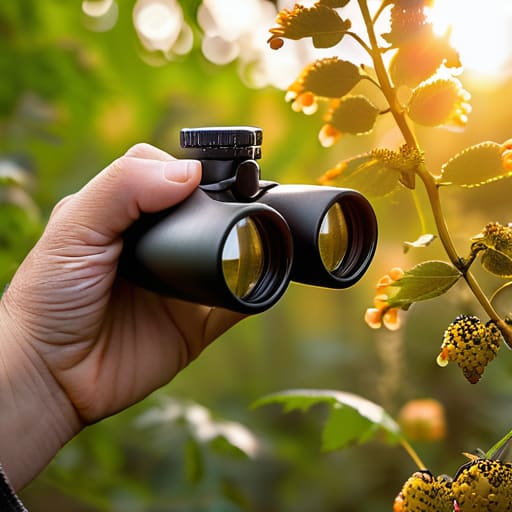
When I’m out on a transect, I’m rarely looking for a massive, obvious bird. I’m usually trying to spot a single Bombus terrestris—the buff-tailed bumblebee—weaving through a patch of brambles. If your field of view is narrow or cluttered, you’ll miss the movement entirely. A huge part of improving field of view isn’t actually about the lenses themselves, but about how you position your body. Stop trying to “hunt” with the binoculars; instead, find your target with your naked eyes first, then bring the optics up to meet them. It sounds simple, but if you’re scanning the hedge while already looking through the glass, you’re just staring at a blur of green.
You also need to talk about adjusting interpupillary distance. This is just the technical way of saying “make sure the two circles actually look like one.” If the barrels aren’t aligned to the distance between your own eyes, you’ll get a headache within ten minutes, and your view will feel like a pinched tunnel. Take a second to twist the barrels until the two circles merge into a single, seamless image. It’s the difference between actually seeing the insect and just squinting at a dark smudge.
Five Ways to Stop Fighting Your Optics and Start Actually Seeing
- Stop the “hunting” habit. When you’re looking for a specific specimen—say, a Bombus terrestris darting through a hedge—don’t swing the binoculars wildly around the frame. You’ll just end up with a headache and a blurry mess. Instead, find your target with your naked eyes first, lock onto it, and only then bring the binoculars up to your eyes. It’s much easier to frame a moving object if you’ve already established where it is in your field of vision.
- Mind the interpupillary distance. This isn’t just a technical setting; it’s the difference between seeing a single, crisp window and seeing two separate, blurry circles. Most people just shove them against their face and hope for the best, but you need to adjust the width until the two circles merge into one perfect field. If you’re squinting or feeling eye strain after ten minutes of surveying, your spacing is probably off.
- Don’t neglect the “steadying” technique. I spent two summers trying to spot small moths in low light, and I learned the hard way that holding binoculars out in mid-air is a recipe for shaky, unusable views. Use your elbows. Tuck them tight against your ribcage or rest them on a fence post or a field stone. Creating a physical tripod out of your own body makes a massive difference when you’re trying to observe something subtle.
- Learn the limits of your magnification. There is a common misconception that higher magnification is always better, but in the field, it’s often a trap. If you go for 10x or 12x magnification, you are significantly increasing the “shake” from your heartbeat and hands. For general surveying or tracking movement in a hedgerow, an 8x pair is often much more effective because it offers a wider field of view and much better stability.
- Check your lighting, not just your focus. You can have the most expensive glass on the market, but if you’re trying to observe a creature in deep shadow or against a direct sunset, you’re going to struggle. Learn to position yourself so the light is hitting your subject, not your lenses. If the glare is washing out the detail, move your feet. It’s more work, but it’s the only way to actually see the diagnostic markings you’re looking for.
Field Notes: What Actually Matters When You’re Looking
Stop fighting the dial; focus is a continuous process of micro-adjustments based on light and distance, not a “set it and forget it” moment.
Your field of view is your most important tool for tracking movement, so learn to scan the periphery rather than just staring at the centre of the lens.
Good optics are useless if you’re physically uncomfortable, so prioritize your posture and stability to ensure you aren’t just seeing a blurry version of the truth.
Beyond the Glass
At the end of the day, using binoculars isn’t about mastering a piece of high-end optical gear; it’s about training your own eyes to work with the technology rather than fighting against it. We’ve covered how to stop the frantic, blurry cranking of the focus dial and how to actually use your field of view to scan a hedgerow instead of just staring at a single patch of green. If you can master that steady, intentional approach to adjusting for light and distance, you stop seeing a vague smudge in the distance and start seeing the actual architecture of the landscape. It’s the difference between just looking and truly observing what is happening in front of you.
I know it feels tedious when you’re standing in a damp field at 5:00 AM, trying to catch a specific moth or a rare passerine, but that precision is where the magic happens. Every time you refine your technique, you’re narrowing the gap between yourself and the natural world. We need people who can actually see what’s happening in our ecosystems, because you can’t protect what you can’t identify. So, get out there, embrace the squinting, and keep looking—because the more accurately you can observe, the more you realize how much is actually happening in the small, quiet spaces right under our noses.
