
Last Tuesday, I spent four hours in a damp hedgerow trying to distinguish between two species of micro-moths that look, to the naked eye, like identical flecks of grey dust. It’s the kind of work that makes you realize why people think biology is just staring at leaves, but the reality is much more frustrating. We’ve all seen the headlines claiming that how DNA barcoding is used is going to magically solve the biodiversity crisis overnight, as if a sequence of nucleotides can replace a healthy ecosystem. But let’s be clear: barcoding isn’t a magic wand that fixes a stripped landscape; it’s just a very precise way of finally admitting exactly what we are losing.
I’m not here to sell you on the hype or drown you in impenetrable genomic jargon. Instead, I want to pull back the curtain on the actual workflow—from the moment a sample hits the ethanol to the moment the data hits the screen. I’ll show you the practical reality of how DNA barcoding is used in real-world conservation, including where the tech actually fails and why we still need people in muddy boots to make sense of the code.
Table of Contents
Why Coi Gene Sequencing Outperforms a Magnifying Glass

If you’ve ever spent an afternoon hunched over a tray of pinned specimens, you know the frustration. You’re staring through a lens, squinting at the subtle difference between two wing venation patterns or the microscopic hair density on a thorax, praying you aren’t about to misidentify a common species for a rare one. Even for seasoned entomologists, traditional morphological keys can be incredibly finicky. This is where COI gene sequencing changes the game. Instead of relying on what an insect looks like—which can be deceptive due to mimicry or simple wear and tear—we look at the actual instruction manual written in its cells.
The Cytochrome c oxidase subunit I (COI) gene is essentially the gold standard for molecular taxonomy applications. Because this specific stretch of DNA evolves at a predictable rate, it acts like a unique serial number for every species. When we run a sample against a DNA barcode database, we aren’t just guessing based on a blurry macro photo; we are matching a digital signature. It moves us away from the “maybe it’s this” stage of field surveying and into a realm of much higher confidence, which is vital when you’re trying to prove a population is actually shifting.
Moving Past Guesswork With Reliable Species Identification Methods
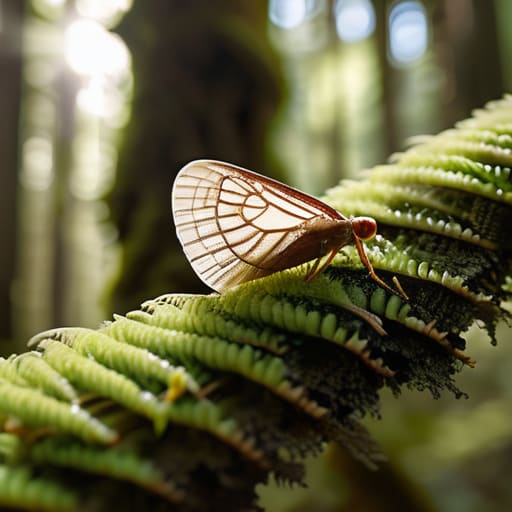
The problem with traditional field surveys is that they rely heavily on “expert eyes,” which is a polite way of saying they rely on people who have spent decades staring at microscopic wing scales. If you’re a student or a volunteer helping me with a transect, you’re going to hit a wall eventually. You’ll find a moth that looks almost like a Noctua pronuba, but you won’t be certain. In the old days, that uncertainty meant we just logged it as “Noctuid moth sp.” and moved on. But when you’re trying to track actual population trends, “maybe” isn’t a data point; it’s a hole in the record.
This is where molecular taxonomy applications change the game. Instead of arguing over whether a specimen belongs to one species or a cryptic complex of three, we can use genetic identification techniques to get a definitive answer. By matching a sequence against a global DNA barcode database, we move away from the guesswork that plagues many legacy datasets. It isn’t about replacing the naturalist; it’s about giving us a way to be actually sure about what is disappearing from our hedgerows.
How to Use Barcoding Without Losing the Biology
- Don’t treat it as a replacement for field observation; a sequence can tell you that you have Bombus terrestris, but it won’t tell you if the colony is struggling because the local hedgerows have been mown too early.
- Prioritize high-quality reference libraries; a DNA barcode is only as good as the database it’s being compared to, so if your local species haven’t been sequenced yet, you’re just matching a code to a question mark.
- Use it specifically for the “difficult” stuff, like cryptic species complexes where two insects look identical under a lens but are genetically distinct and have totally different ecological roles.
- Keep your morphological vouchers; I know it’s extra work, but if a barcode result looks weird, you need the physical specimen to double-check the ID and ensure you aren’t chasing a sequencing error.
- Focus on environmental DNA (eDNA) for broad surveys; instead of catching every single individual, you can sample water or soil to see a “snapshot” of what’s present, though we need much more long-term data before we can rely on this for population trends.
What to remember when the data gets messy
DNA barcoding isn’t a replacement for field biology; it’s a way to verify it. You still need to know where the insect came from and what it was doing, but the COI gene ensures you aren’t accidentally counting three different species as one just because they look similar under a lens.
We have to stop treating “more insects” as a vague goal and start asking “which specific insects?” DNA barcoding gives us the granular data needed to see if we are actually recovering specialist species or just seeing a temporary surge in a few generalist survivors.
Accuracy matters more than speed when it comes to conservation funding. If our surveys are based on guesswork or misidentified specimens, the resulting policy will be built on a foundation of errors—and we can’t afford to get the science wrong when the stakes are this high.
The Data Behind the Decline
We have to move past the idea that DNA barcoding is some futuristic luxury for high-end labs; it is becoming a fundamental necessity for anyone trying to track biodiversity in real-time. By using the COI gene to bypass the limitations of visual identification, we aren’t just making life easier for taxonomists—we are building a more accurate map of what is actually surviving in our hedgerows and gardens. Whether we are sorting through a messy bulk sample from a moth trap or trying to distinguish between two nearly identical species of hoverfly, this tech provides the granular accuracy that traditional morphology often misses. It turns guesswork into verifiable data, which is the only currency that actually matters when we are trying to prove to policymakers that a specific habitat is worth saving.
Ultimately, the sequence in a tube is only as useful as the action it inspires. A high-resolution genetic profile of a declining pollinator population doesn’t mean much if we don’t use that information to change how we manage our landscapes. We don’t need more alarmist headlines; we need the precise evidence that allows us to say, “This specific species is here, and this is exactly why it needs this field margin to stay alive.” The technology gives us the truth, but it’s up to us to translate that truth into something that actually protects the small, buzzing things that keep our world turning.
