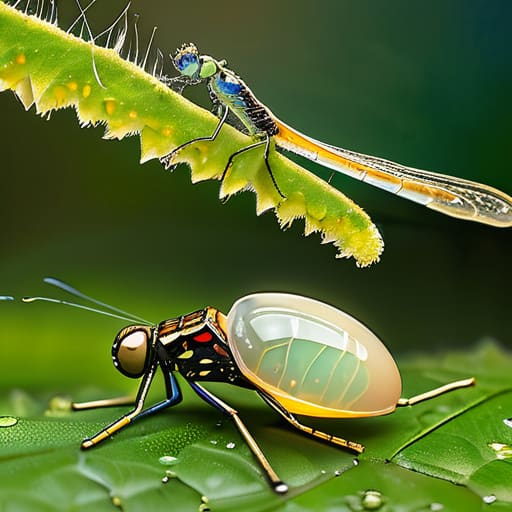
I spent three years of my PhD chasing Bombus terrestris through hedgerows that were more mud than meadow, and if those seasons taught me anything, it’s that the way we talk about metamorphosis is often wildly oversimplified. You’ll see a dozen infographics claiming to explain how insect life cycles work, usually featuring a perfectly symmetrical butterfly that looks like it belongs on a greeting card rather than in a damp, unpredictable ecosystem. But nature isn’t a clean, linear diagram; it’s a series of high-stakes timing games where a single week of unseasonable frost can decouple a larva from its host plant and break the entire chain.
I’m not here to give you the sanitized, textbook version of biology that ignores the messy reality of field data. Instead, I want to show you what actually happens when you look past the diagrams and into the dirt. We are going to look at the actual mechanics of survival—from the physiological bottlenecks of larval stages to why certain species are winning while others are quietly vanishing. I’ll tell you what the surveys actually show, when the evidence is still thin, and why the timing matters more than the transformation itself.
Table of Contents
Decoding Biological Metamorphosis Types Without the Hype
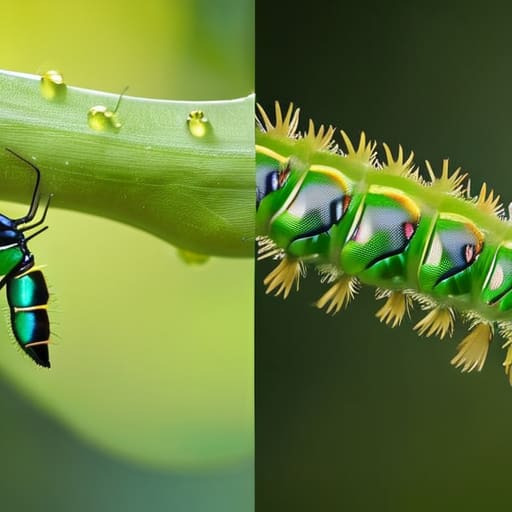
When we talk about how insects change, we usually default to the dramatic imagery of a caterpillar dissolving into goo to become a butterfly. While that’s a spectacular bit of biological engineering, it’s only one way to play the game. In my field work, I spend a lot of time distinguishing between hemimetabolous vs holometabolous development, because the way an insect grows dictates exactly where you need to look for them in a hedgerow.
If you’re looking at a grasshopper or a dragonfly, you’re seeing a nymph development process. These insects undergo incomplete metamorphosis; they basically just look like miniature, wingless versions of their parents, gradually growing larger with each molt. There is no “hidden” stage here. On the other hand, the more complex larva to adult transformation seen in beetles or bees involves a complete structural overhaul. This is where things get tricky for conservation. If a garden provides plenty of nectar for an adult bee, but the soil is too compacted for the larvae to survive, the population is still doomed. We can’t just protect the “pretty” stage and assume the cycle is safe.
Why Larva to Adult Transformation Is Never Linear
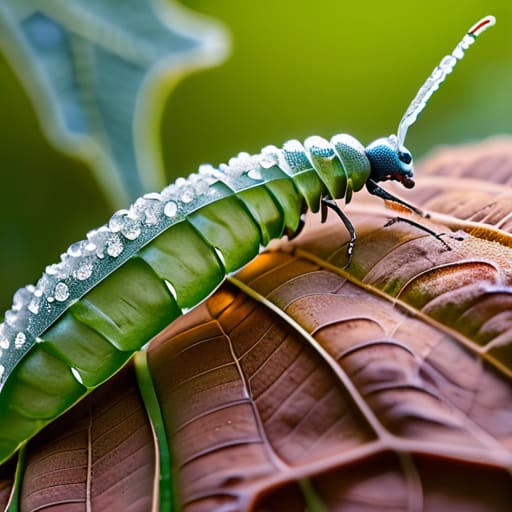
In my fieldwork, the biggest misconception I encounter is the idea that an insect’s journey from egg to reproductive adult is a steady, predictable climb. It isn’t. If you look at the actual data from field surveys, you see that the larva to adult transformation is often interrupted by environmental volatility that textbooks tend to smooth over. A single late frost or a week of unseasonable drought doesn’t just slow things down; it can fundamentally decouple the timing of a species’ development from the availability of its food source.
When we talk about hemimetabolous vs holometabolous strategies, we aren’t just discussing different anatomical blueprints; we are talking about different ways of gambling against the environment. A nymph undergoing a gradual development process is constantly exposed to the same risks as the adult, whereas a holometabolous insect—like the moths I track in my garden—uses the pupal stage as a kind of biological buffer. However, even that buffer isn’t a guarantee. If the habitat is fragmented, the energy cost of simply reaching maturity can become so high that the individual never actually reaches the reproductive phase, leaving the population in a precarious state that a simple “life cycle” diagram will never show you.
Field Notes: What the Life Cycle Data Actually Teaches Us
- Stop looking for the “perfect” timing. In my transect surveys, I’ve learned that phenology—the timing of biological events—is incredibly messy. A warm week in April might trigger an early emergence of Bombus terrestris, but if the nectar sources haven’t caught up, that “successful” emergence is actually a demographic trap.
- Prioritize the “hidden” stages. We tend to obsess over the flashy adults—the butterflies and dragonflies—but the data shows that the most critical vulnerability is almost always in the larval or pupal stages. If your garden provides flowers but zero host plants for caterpillars, you aren’t supporting a life cycle; you’re just hosting a temporary stopover.
- Beware of the “single season” fallacy. One good year for a specific moth species doesn’t mean the population is stable. Many insects rely on multi-year cycles or specific overwintering conditions in the soil or leaf litter. A single frost can wipe out a cohort, so we have to look at long-term trends, not just this summer’s sightings.
- Manage for the gaps, not just the peaks. Most people plant for the peak bloom of summer, but an insect life cycle is a continuous chain. If there is a three-week gap in floral availability between the emergence of one species and the next, that’s where the population decline often happens. We need “bridge” plants to keep the energy flowing.
- Accept the uncertainty of the “unseen.” A lot of what we think we know about life cycles is based on what we can actually catch in a net or a trap. There is a massive amount of “dark data” regarding the soil-dwelling stages of many beetles and flies. When a study claims a species is “gone,” I always check if they actually surveyed the ground, not just the air.
What to actually look for in your local ecosystem
Stop treating life cycles like a predictable conveyor belt; a sudden lack of caterpillars doesn’t always mean a population crash, it might just mean the timing of the local bloom shifted by a week.
Recognize that “metamorphosis” isn’t a single way of doing things, and the specific type of transformation—whether it’s the radical overhaul of a butterfly or the subtle shift of a true bug—dictates exactly what kind of habitat they need to survive.
Focus your conservation efforts on the “messy” middle stages, because while we all love seeing the adult pollinators, the real survival battle happens in the larval stages where the food requirements are much more specific and much harder to meet.
Beyond the Lifecycle Loop
When we strip away the sensationalist headlines, what we are left with is a reality that is far more complex than a simple circle of birth and death. We have seen that metamorphosis isn’t just a neat biological trick; it is a series of high-stakes transitions where the environment dictates survival. Whether it is the complete transformation of a Lepidoptera or the gradual shift of a hemimetabolous species, these stages are vulnerable to every fluctuation in temperature and plant availability. Understanding that these cycles are non-linear and highly sensitive to local conditions is the only way we can move past the “insect apocalypse” tropes and start looking at the actual mechanisms of survival.
If you want to help, stop looking for a silver bullet and start looking at the margins. You don’t need to solve global biodiversity loss by Tuesday; you just need to understand that a single patch of native wildflowers or a pile of decaying wood provides the specific, messy habitat required for these life cycles to actually complete. When we protect the interconnectedness of these stages, we aren’t just saving a single bug; we are supporting a biological process that has been refined over millions of years. Let’s focus on building better stepping stones in our own gardens, one life cycle at a time.
