I spent three weeks last summer tracking dung beetle activity in a managed pasture, and if there’s one thing I learned, it’s that the “rewilding” headlines are getting a bit out of hand. You see these glossy magazine spreads claiming that simply dropping a few bison into a field will magically reset the clock on biodiversity, but the actual data on how large herbivores shape landscapes is rarely that tidy. It isn’t just about the animals being “present”; it’s about the specific, messy, and often unglamorous ways they disturb the soil and cycle nutrients. We need to stop treating large grazers like a magic wand for conservation and start looking at the actual mechanics of their impact.
In this post, I’m skipping the romanticized fluff to look at what the field surveys actually tell us. I want to walk you through the distinction between mere presence and meaningful ecological function, explaining why the intensity of grazing matters far more than the species name on the sign. I’ll be clear about where the evidence is robust and where we’re still just making educated guesses, so you can understand the real science behind the hype.
Table of Contents
- The Messy Reality of Ecosystem Engineering by Megafauna
- Why Trophic Cascades and Herbivory Are Rarely as Simple as Headlines Claim
- Beyond the bison hype: 5 things the field data actually tells us
- What the data actually tells us about the "landscape architects"
- Beyond the headline: what we actually need to do
The Messy Reality of Ecosystem Engineering by Megafauna
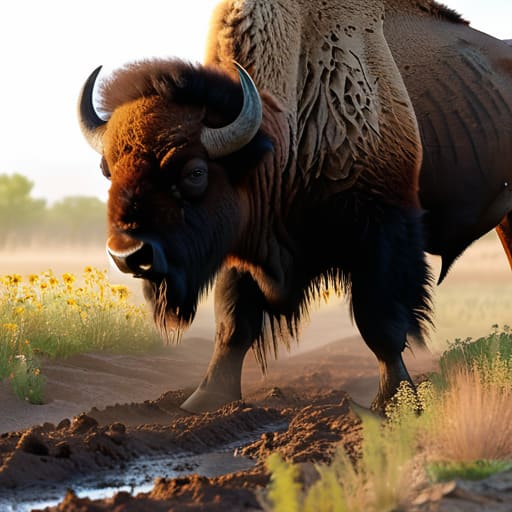
The problem with the “landscape architect” narrative is that it tends to flatten the actual mechanics of the field. When people talk about ecosystem engineering by megafauna, they often picture a tidy, cinematic version of nature where a bison walks through a field and—poof—a diverse meadow appears. In reality, the data suggests something much more chaotic. It isn’t just about the presence of the animal; it is about the specific, often unpredictable ways they interact with the soil and the plants.
We see this most clearly when looking at vegetation dynamics and herbivore density. If you have too many grazers in a closed system, you don’t get a mosaic of habitats; you get a biological desert of trampled mud and overgrazed stubble. The “engineering” part isn’t a magic wand; it’s a high-stakes balancing act. We have to move away from the idea that more is always better and start looking at how trophic cascades and herbivory actually function in specific, localized contexts. It’s not a universal rulebook; it’s a messy, site-specific negotiation between the animal and the ground beneath its feet.
Why Trophic Cascades and Herbivory Are Rarely as Simple as Headlines Claim

The problem with the “trophic cascade” narrative is that it’s often presented as a clean, downward domino effect: you add a wolf, the deer die off, the trees grow back, and suddenly everything is fine. It’s a beautiful, linear story, but when you’re actually looking at the field data, the reality of trophic cascades and herbivory is far more chaotic. In my experience, nature doesn’t follow a straight line; it follows a web of feedback loops. You might introduce a grazer to manage a field, but if the herbivore density doesn’t align with the specific plant community’s recovery rate, you don’t get a thriving meadow—you get a patch of bare earth and a lot of wasted funding.
We also need to stop treating “grazing” as a single, monolithic action. The actual impact of grazing on biodiversity depends entirely on the timing, the intensity, and the specific gut microbes of the animals doing the eating. A herd of cattle moving through a meadow in July does something fundamentally different than a group of wild horses grazing in April. It’s not just about how much grass gets eaten; it’s about how those specific patterns of movement influence the micro-climates at the soil level.
Beyond the bison hype: 5 things the field data actually tells us
- Stop looking for a magic bullet. People tend to treat rewilding like a software update where you just drop a herd of cattle into a field and the ecosystem “fixes” itself. The reality is that landscape shaping is a slow, chaotic process of trial and error, not a programmed outcome.
- Watch the movement, not just the numbers. It’s easy to count how many animals are in a paddock, but it’s much harder—and more important—to track how they actually move through it. A herd that stays in one corner is just a group of heavy eaters; a herd that wanders is actually performing the “engineering” we talk about.
- Distinguish between biomass and impact. You can have a massive amount of animal weight on a landscape that does absolutely nothing to change the plant community. Impact comes from the specific ways they disturb the soil or create gaps in the canopy, not just the sheer volume of manure they leave behind.
- Acknowledge the “spatial patchiness.” Nature isn’t a uniform carpet. Large herbivores create a mosaic of trampled mud, high-growth clumps, and grazed-down patches. If your management goal is a perfectly even meadow, you’re actually working against the very heterogeneity that these animals are supposed to provide.
- Check your scale. What works in a controlled, fenced-off experimental plot rarely translates perfectly to a thousand-hectare landscape with roads, fences, and human interference. We need to be careful about taking small-scale survey data and assuming it’s a universal law for how megafauna behave in the wild.
What the data actually tells us about the "landscape architects"
We need to stop treating “trophic cascades” like a magic wand; while large herbivores certainly move the needle on vegetation structure, they aren’t a universal fix for every degraded habitat, and the evidence for their impact varies wildly depending on the specific local ecology.
The “engineering” label is often too broad—grazing isn’t just one thing, and the distinction between how a single bison shapes a patch of ground versus how a whole herd shifts a landscape is a nuance that most headlines completely skip over.
Effective conservation requires looking past the charismatic megafauna to see the messy, localized interactions; we can’t just drop a herd into a field and assume the ecosystem will “reset” itself without considering the existing soil, plant, and insect communities already in place.
Beyond the headline: what we actually need to do
We have to stop treating large herbivores like magical, one-size-fits-all solutions to every ecological crisis. As I’ve tried to show, the data doesn’t support the idea that simply dropping a herd of bison into a degraded field will instantly reset the clock to a prehistoric ideal. It is much more nuanced than that. The way these animals move, how they graze, and how their presence affects everything from soil compaction to seed dispersal is deeply site-specific. If we ignore the local context—the specific soil types, the existing plant communities, and the actual density of the animals—we risk implementing “solutions” that are more about aesthetic restoration than functional ecology. We need to move past the simplified narratives and focus on the granular reality of how these animals interact with their specific habitats.
That isn’t to say that rewilding or managed grazing is a lost cause; it just means we need to be smarter about it. Real conservation isn’t about chasing a perfect, static snapshot of the past, but about fostering dynamic, resilient systems that can actually function in a changing world. Whether we are talking about a massive national park or a tiny strip of managed pasture, the goal is to understand the mechanics of the landscape. When we stop looking for quick fixes and start looking at the actual ecological processes, we stop being spectators to a decline and start becoming effective stewards of the messiness that makes nature work.
