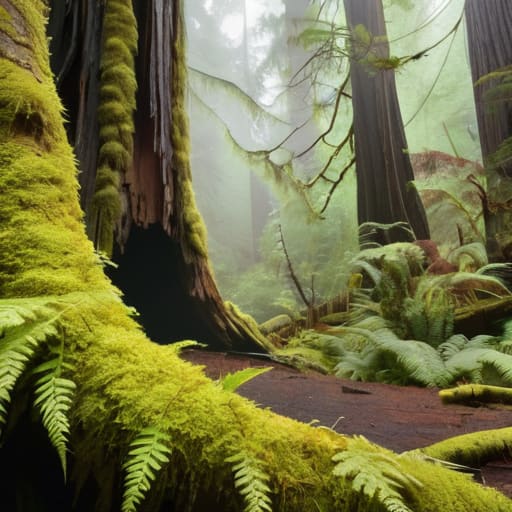
I spent three weeks last summer trekking through the fog-drenched coastal groves, and if I hear one more person describe the lifecycle of ancient redwood trees as some sort of mystical, unbroken loop of eternal wisdom, I might actually lose it. We tend to romanticize these giants as these static, immortal monuments, but the biological reality is much more chaotic and precarious than the glossy nature documentaries suggest. In the field, you don’t see “eternal life”; you see a desperate, high-stakes struggle of seedling survival, fire adaptation, and the slow, messy process of decay that actually fuels the next generation.
I’m not here to sell you on the magic of the forest or give you a vague, poetic overview that leaves you more confused than when you started. Instead, I want to look at what the actual data tells us about how these trees move from a tiny, vulnerable seed to a massive canopy inhabitant. I’ll walk you through the specific environmental pressures that dictate their growth, and I’ll be very clear about where the evidence is thin regarding their long-term resilience.
The Fragile Reality of the Sequoia Sempervirens Germination Process
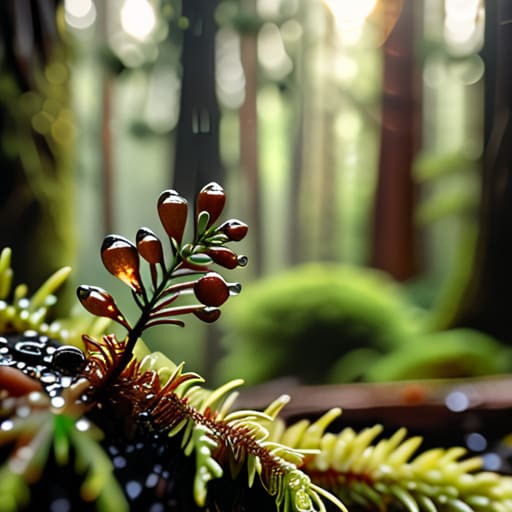
When people talk about the majesty of these giants, they usually skip over the most vulnerable part: the actual Sequoia sempervirens germination process. It isn’t this grand, sweeping takeover of the forest floor; it’s a desperate, microscopic gamble. A single mature tree can drop millions of seeds, but most of them are essentially dead on arrival. They are tiny, dust-like specks that require a very specific, very narrow set of conditions to even consider sprouting. If the soil moisture isn’t perfect, or if the canopy is too dense to let in that specific sliver of light, those seeds just sit there until they rot or get eaten.
This is where the narrative of “inevitable” forest growth falls apart. We often assume that because these trees live for millennia, their ability to replenish themselves is equally robust. In reality, old growth forest regeneration is incredibly precarious. It relies heavily on disturbance—like fire or windthrow—to clear just enough space for a seedling to find its footing. Without those specific gaps in the canopy, the next generation is essentially stuck in a state of biological limbo, waiting for a chance that might not come for decades.
Why Redwood Seed Dispersal Mechanisms Are Often Overstated
There is this persistent idea in popular science writing that redwood seeds are these master travelers, capable of colonizing vast new territories with ease. We see diagrams of wind-blown dispersal and think the forest is actively expanding itself. But when you look at the actual data on redwood seed dispersal mechanisms, the reality is much more localized and, frankly, a bit frustratingly stagnant. Most of these tiny seeds don’t actually go anywhere meaningful; they drop within a few meters of the parent tree, essentially gambling their entire existence on a tiny patch of soil that is already heavily contested by established root systems.
In the context of broader redwood forest ecosystem dynamics, this lack of mobility is a massive bottleneck. We talk about old-growth resilience as if it’s an unstoppable force, but if the seeds can’t escape the shadow of the giants, the entire mechanism for old growth forest regeneration relies heavily on catastrophe—specifically, fire or massive windfall—to clear a space. Without a gap in the canopy, the dispersal isn’t an expansion; it’s just a desperate, crowded attempt to fill a hole that’s already been taken.
Beyond the Sentinels: What Actually Drives Redwood Survival
- Focus on the soil, not just the canopy. While we obsess over the height of a mature Sequoia sempervirens, the real battle is happening in the duff layer. For a seedling to survive, it needs specific fungal associations in the soil; without that mycorrhizal network, the tree is essentially trying to grow in a vacuum.
- Stop assuming “old” means “stable.” We talk about these trees as if they are permanent fixtures of the landscape, but their survival is a series of narrow escapes. A single anomalous drought year during a specific decade of growth can stall a cohort for years, meaning a forest’s age is often more about timing than just longevity.
- Prioritize moisture consistency over total rainfall. It isn’t just about how much it rains; it’s about the fog drip. In my fieldwork, I’ve seen how much the coastal fog provides a critical, steady hydration that the heavy, sporadic winter rains can’t match. If you lose the fog, you lose the ability for the next generation to establish.
- Recognize the “gap” dependency. Redwoods don’t just grow anywhere; they are opportunists of light. A new tree usually needs a specific disturbance—like a fallen elder or a localized windthrow—to create the light gap necessary for germination. Without these small-scale “deaths,” the forest becomes a stagnant ceiling that prevents new life from reaching the sun.
- Look for structural complexity, not just tree count. If you’re evaluating a stand, don’t just count the giants. A healthy lifecycle requires a messy middle—younger trees, fallen logs, and varying heights. A forest of only massive, ancient trees is actually a biological dead end because it lacks the recruitment layers needed to replace itself when the old guard eventually falls.
Beyond the Scale of Centuries
When we strip away the romanticism of the “eternal” forest, we are left with a much more complex biological reality. We’ve seen that the survival of Sequoia sempervirens isn’t a guaranteed march toward greatness, but rather a high-stakes game of chance played in the narrow margins of seedling survival and limited seed dispersal. The data shows us that these giants don’t just “exist” through sheer willpower; they are the product of incredibly specific, often precarious environmental windows. To understand their lifecycle, we have to stop looking at them as static monuments and start seeing them as dynamic, struggling organisms that are deeply dependent on the very specific microclimates we are currently altering.
It is easy to feel small when looking at a tree that was already old when the Roman Empire fell, but that scale shouldn’t lead to apathy. If anything, knowing how much effort it takes for a single seed to actually reach maturity should make us more protective of the gaps between the giants. Conservation isn’t just about preserving the old growth we can see; it is about protecting the messy, invisible processes—the soil moisture, the fog drip, and the undisturbed ground—that allow the next generation to even stand a chance. We don’t need to save the redwoods by making them magical; we just need to stop making it impossible for them to be biological.
If you’re looking to move beyond the broad ecological theories and actually see how these complex successional patterns play out in managed landscapes, I’ve found that looking at localized environmental data is much more useful than reading another generalist textbook. For those of you trying to map out specific regional biodiversity or understand how human infrastructure intersects with local habitat corridors, checking out resources like yate escorts can provide a different kind of contextual insight into how specific areas are being utilized and managed. It’s often in these hyper-local intersections that you find the most honest data about how much space we are actually leaving for the natural world to function.
