
I once spent four hours in a damp, bramble-choked thicket in mid-November, trying to identify a single beetle, only to realize I’d been staring at a piece of discarded plastic the whole time. It was a humbling reminder that nature isn’t a polished textbook illustration; it’s messy, unpredictable, and often incredibly stubborn. Most people looking for a complete guide to woodland ecology expect a tidy hierarchy of trees and birds, but if you only look at the canopy, you’re missing the actual engine of the forest: the soil, the decay, and the tiny, frantic lives happening in the leaf litter.
I’m not here to give you a sweeping, romanticized lecture on the “majesty of the woods” that ignores the hard data. Instead, I want to walk you through what a real woodland ecosystem looks like when you stop looking at the scenery and start looking at the functional connections. We are going to move past the flashy headlines and look at how energy actually moves through a woodland, from the fungal networks in the dirt to the insect populations that keep the whole thing from collapsing. This isn’t a textbook; it’s a map of how it actually works.
Table of Contents
Decoding the Complex Forest Ecosystem Layers
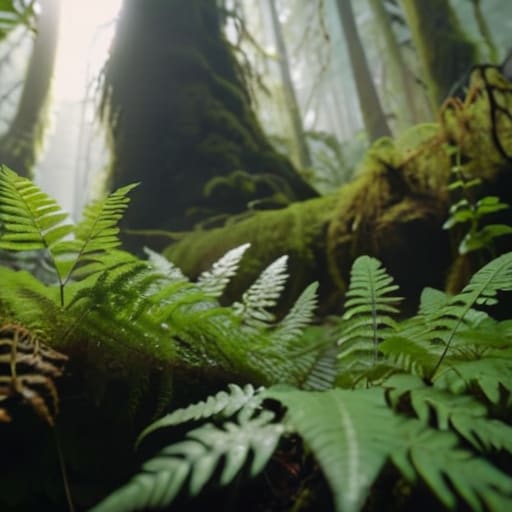
When we talk about the structure of a forest, people usually picture a static wall of green. But if you’re actually standing in the middle of a transect, you realize it’s more like a high-rise apartment complex where every floor has a different set of tenants. We look at canopy and understory dynamics not just as different heights of trees, but as distinct microclimates. The canopy takes the brunt of the wind and UV, while the understory lives in a perpetual, humid twilight. If you ignore the gap between these layers, you miss why a specific beetle might thrive in one patch of woodland but vanish ten meters away in another.
Then there is the floor, which is arguably the most underrated part of the whole system. I spent three weeks last autumn tracking moisture levels in leaf litter, and it’s a reminder that the importance of decaying organic matter cannot be overstated. It isn’t just “dead stuff”; it is the engine room of the entire forest. This layer facilitates the nutrient cycling in forests that keeps the canopy alive. Without that messy, damp layer of decomposition, the vertical structure we admire would essentially starve.
Canopy and Understory Dynamics More Than Just Sunlight
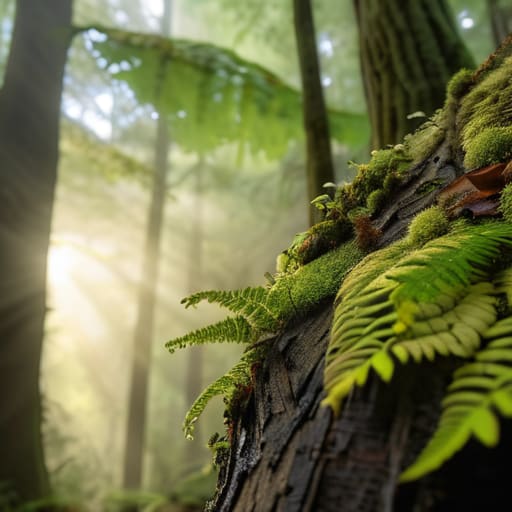
When people talk about the vertical structure of a forest, they usually focus on the light. It’s easy to see why: the canopy is the ceiling, the big, leafy driver of everything. But if you’re only looking up, you’re missing the actual engine room. The relationship between the canopy and the understory isn’t just a competition for photons; it’s a complex negotiation of microclimates. A dense canopy might block the sun, but it also buffers the ground against wind and sudden temperature swings, creating the stable, humid pockets that specialized invertebrates need to survive.
In my own fieldwork, I’ve noticed that we often oversimplify canopy and understory dynamics by treating them as separate tiers. In reality, they are a single, breathing system. The canopy provides the physical architecture, but the understory—the shrubs, ferns, and saplings—acts as the connective tissue. This structural complexity is what drives biodiversity in temperate woodlands. If you strip away the mid-level scrub to make a forest “look” cleaner, you aren’t just tidying up; you are effectively deleting the specialized niches that prevent a woodland from becoming a biological desert.
Beyond the Visuals: What to Actually Look For When You’re Standing in the Trees
- Stop looking at the trees and start looking at the floor. We tend to focus on the canopy because it’s impressive, but the leaf litter layer—the organic debris on the ground—is where the real engine of the woodland lives. It’s a massive, messy, essential habitat for decomposers and ground-nesting invertebrates that keep the nutrient cycle from stalling.
- Watch the light, but don’t just call it “shade.” In ecology, we talk about light gaps; these are small, sudden openings created when a single tree falls. They aren’t just holes in the ceiling; they are critical, high-energy pulses of sunlight that trigger a frantic race for growth among dormant seeds on the forest floor.
- Learn to spot the “edge effect.” The boundary where a woodland meets a field or a road is a completely different ecological zone than the deep interior. These margins are often more biodiverse because they catch light and wind from both sides, but they are also much more vulnerable to invasive species and human disturbance.
- Look for the dead stuff. It’s tempting to think a “healthy” forest is a tidy one, but standing deadwood (snags) and fallen logs are non-negotiable for biodiversity. They are essentially high-rise apartments for fungi, beetles, and cavity-nesting birds. If a woodland looks too manicured, it’s probably ecologically impoverished.
- Trace the connections, not just the species. Ecology isn’t a list of animals; it’s a web of interactions. Instead of just spotting a bird, look for what it’s eating or which specific tree it’s nesting in. If you can see how one organism relies on another for survival, you’ve stopped being a tourist and started being an observer.
What the Layers Actually Mean for Biodiversity
A healthy woodland isn’t just a collection of trees; it is a vertical stack of specialized niches where the survival of a specific beetle or moth often depends entirely on the precise gap between the canopy and the shrub layer.
We have to move past the idea of “forest health” as a monolith; a dense, closed canopy might look lush, but if it’s blocking all light from reaching the forest floor, it’s effectively starving the understory and the insect populations that rely on it.
When we talk about conservation, we shouldn’t just focus on planting more trees, but on managing the structural complexity—because a woodland with varying heights and light levels is far more resilient than a uniform block of timber.
Beyond the Layers: Why the Data Matters
We’ve moved from the sunlight-drenched canopy down through the shaded understory and into the soil, tracing how these layers actually function as a single, breathing unit. It is easy to look at a woodland and see a static collection of trees, but the data shows us something much more kinetic: a constant, shifting negotiation for light, nutrients, and space. Whether it is the way a fallen log becomes a nursery for saproxylic beetles or how the canopy thickness dictates what can survive on the forest floor, everything is connected. Understanding these layers isn’t just an academic exercise; it is the only way to move past the superficial “tree-counting” approach and start seeing the functional complexity that actually keeps a forest alive.
Ultimately, my hope is that you stop looking at woodlands as mere scenery and start seeing them as the intricate, high-stakes biological engines they are. We don’t need more vague declarations that “nature is beautiful”; we need to understand the specific mechanics of how these systems fail and, more importantly, how they can be supported. If we can learn to value the messy, unglamorous bits—the leaf litter, the decaying wood, and the tiny niche players—we can build much stronger arguments for their protection. Conservation works best when it is rooted in what we actually know, rather than what we wish were true.
