I spent three hours last Tuesday knee-deep in damp leaf litter, trying to map out a single hedgerow margin, when I realized just how much the “Wood Wide Web” metaphor has done a disservice to actual soil science. Every time I scroll through my feed, I see these sweeping, almost magical claims about how mycorrhizal networks work—as if trees are sitting around having conscious, tea-time chats through their roots. While the symbiotic relationship between fungi and plants is undeniably vital, we need to be careful about turning a complex biochemical exchange into a sentient internet. It’s not a conscious conversation; it’s a high-stakes trade of carbon for phosphorus, and treating it like a fairytale is exactly how we lose the nuance needed for real conservation.
In this post, I’m stripping away the anthropomorphic fluff to look at what the data actually shows. I want to explain the mechanics of these fungal connections without the breathless hype, focusing on what we know for certain and where the evidence remains thin. My goal isn’t to sell you a “magic” soil inoculant, but to give you a clear, evidence-led understanding of how these networks function in a real, messy ecosystem.
Table of Contents
The Reality of the Symbiotic Relationship Between Fungi and Roots

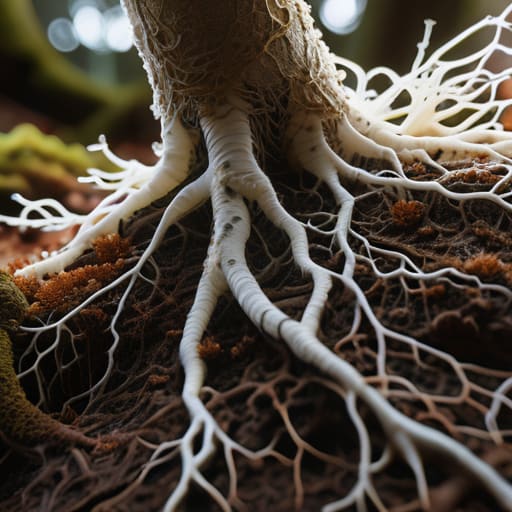
To understand the symbiotic relationship between fungi and roots, you have to move past the idea of a sentient forest “talking” and look at the actual biological transaction taking place. At its core, this is an exchange of currencies. The plant is an expert at photosynthesis, turning sunlight into sugar, while the fungi are masters of scavenging. The fungi extend their hyphae—tiny, thread-like filaments—far beyond where a plant’s roots could ever reach, mining the soil for phosphorus and nitrogen. In return, the plant pays a “tax” in the form of carbon.
It isn’t a one-size-fits-all system, either. We generally categorize these players into two camps: ectomycorrhizal vs endomycorrhizal fungi. The former essentially wrap around the root tips like a glove, while the latter actually penetrate the cell walls themselves. While people love to use the “wood wide web explained” trope to suggest trees are sending intentional warnings to their neighbors, the data suggests something more mechanical. It is less about a conscious conversation and more about a massive, complex web of carbon transfer in soil networks that follows the laws of resource gradients.
Ectomycorrhizal vs Endomycorrhizal Fungi Sorting Fact From Folklore
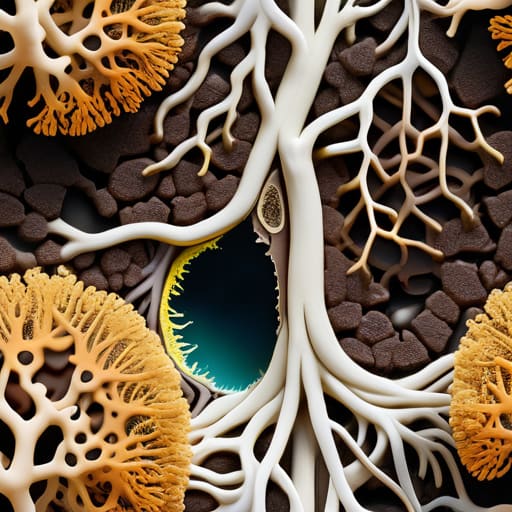
When you start digging into the literature, you quickly realize that “mycorrhizal” isn’t a monolith. We tend to lump them all together in casual conversation, but the distinction between ectomycorrhizal vs endomycorrhizal fungi is where the actual mechanics of the soil change. Ectomycorrhizal fungi are the socialites; they wrap around the root tips like a tight sleeve but never actually puncture the cell walls. You see this most often in our temperate woodlands with oaks and pines. Endomycorrhizal fungi (specifically arbuscular mycorrhizae) are much more invasive—and I don’t mean that in a bad way. They actually penetrate the cell membranes to create tiny, branching structures that facilitate direct exchange.
This distinction matters because it dictates how nutrient cycling in forest ecosystems actually functions on a granular level. While the “Wood Wide Web” headlines love to suggest a universal, seamless internet under our feet, the reality is a fragmented patchwork of different fungal strategies. Some networks are built for high-speed phosphorus transfer, while others are more about long-term carbon storage. It isn’t one single, magical connection; it’s a complex, highly specific negotiation between different species.
Moving Beyond the 'Wood Wide Web' Hype: Practical Realities
- Stop thinking of it as a conscious internet. While the term “Wood Wide Web” makes for a great headline, these networks are chemical and resource-based, not a sentient conversation. When you’re looking at soil health, focus on the actual flow of carbon and phosphorus rather than imagining trees are “chatting” about the weather.
- Prioritize soil structure over chemical additives. If you’re trying to support these networks in a garden or a managed field, the worst thing you can do is heavy tilling. Every time you churn the soil, you aren’t just moving dirt; you are physically shredding the delicate hyphal threads that make the whole system work.
- Diversify your plant selection to support different fungal types. Since we know ectomycorrhizal and endomycorrhizal fungi operate differently, a monoculture is a death sentence for network complexity. If you want a robust underground system, you need a variety of host plants to keep different fungal players in the game.
- Be wary of high-phosphorus fertilizers. It sounds counterintuitive, but if you flood the soil with easy-access phosphorus, the plants often stop “investing” in their fungal partners. They essentially fire their contractors because they don’t need the service anymore, which leaves the long-term soil ecology much more fragile.
- Observe the margins, not just the center. In my field surveys, I’ve seen that the most resilient networks often exist in the messy, unmanaged edges of a habitat. If you want to encourage fungal connectivity, leave the leaf litter and the “untidy” bits alone; that’s where the biological infrastructure actually lives.
What to actually remember about the network
Don’t get caught up in the “Wood Wide Web” metaphors; while the exchange of nutrients is a measurable biological reality, we shouldn’t mistake a chemical resource transfer for a conscious, intentional conversation between trees.
The distinction between ectomycorrhizal and endomycorrhizal fungi isn’t just academic—it dictates which plant species can thrive in specific soils and how much control the fungus actually has over the root structure.
Evidence for large-scale “resource sharing” between different species is still a bit thin, so while these networks are vital for individual plant health, we need to be careful about claiming they function as a single, unified forest intelligence.
Moving Beyond the Metaphor
So, where does that leave us? We’ve moved past the idea of trees “talking” like humans and looked at what is actually happening under our boots: a complex, resource-driven exchange mediated by fungi. Whether you are looking at the highly specialized ectomycorrhizal fungi wrapping around root tips or the more pervasive endomycorrhizal networks penetrating cell walls, the takeaway is the same. These aren’t magical social networks; they are highly efficient biological trade routes built on the exchange of carbon for nutrients. It is a messy, competitive, and incredibly vital biological transaction that keeps the soil from becoming a stagnant graveyard of nutrients.
I know it is tempting to want a more romantic version of ecology—something that feels like a sentient forest whispering to itself—but the reality is actually more impressive. The fact that these systems function through unseen chemical gradients and microscopic fungal threads, without any central intelligence or “plan,” is what makes them resilient. If we want to protect our landscapes, we have to stop thinking about plants as isolated individuals and start protecting the unseen connectivity of the soil. When we preserve a patch of ground, we aren’t just saving the trees we can see; we are saving the invisible infrastructure that makes life possible.
