
I spent three hours last Tuesday knee-deep in a damp, stinging nettle patch, trying to count Bombus terrestris while my boots slowly filled with freezing rainwater. It wasn’t glamorous, but it was real. I see so many “nature lover” Instagram accounts pushing this idea that the perfect garden is a pristine, manicured sanctuary where every leaf is in its place. It’s a lie. In reality, a landscape that is too “tidy” is often a biological desert. We need to talk about the messy truth of how disturbance maintains diversity, because if you scrub every bit of “chaos” out of your hedgerows and flowerbeds, you are effectively starving the specialists that actually keep our ecosystems breathing.
I’m not here to give you a list of expensive, high-tech gadgets or vague, alarmist slogans that leave you feeling guilty. Instead, I want to show you what the data actually says about the value of a little bit of neglect. I’ll explain the specific, small-scale disruptions—like leaving a patch of bare soil or letting the weeds run wild—that genuinely move the needle for local insect populations. No hype, no impenetrable jargon, just the actual mechanics of how a little bit of mess creates a lot of life.
Table of Contents
The Intermediate Disturbance Hypothesis Finding the Sweet Spot

If you look at a landscape that hasn’t been touched in decades, you might think it’s a biodiversity jackpot. In reality, it can become a bit of a monopoly. Without any disruption, a few dominant, aggressive species tend to move in, hogging all the resources and effectively locking everyone else out. This is where the intermediate disturbance hypothesis comes into play. It’s the idea that there is a “Goldilocks zone” of disruption—not so much that everything gets wiped out, but just enough to prevent any single species from becoming a permanent landlord.
Think of it like a crowded room where one person is hogging the only snack bowl. A little bit of movement, a bit of shuffling, allows others to grab a bite. In ecology, these small-scale disruptions create niche availability in disturbed ecosystems, providing little gaps in the canopy or patches of bare soil that specialist species need to survive. When we talk about species richness and environmental change, we aren’t just talking about surviving a storm; we’re talking about how those pulses of change prevent the biological equivalent of a stagnant pond.
Why Niche Availability in Disturbed Ecosystems Drives Species Richness
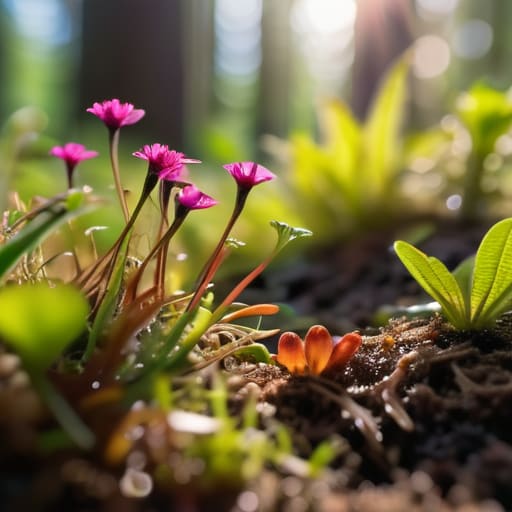
Think of a field that hasn’t been touched in decades. It looks peaceful, but ecologically, it’s often a bit of a stalemate. Without any disruption, a few dominant, aggressive plant species move in and effectively stage a coup, hogging all the light, soil nutrients, and space. This is where succession in disturbed habitats becomes such a vital concept; when a small disturbance—like a heavy flood, a grazing animal, or even a bit of manual clearing—knocks those dominant players back, it creates a vacuum.
That vacuum is actually a golden opportunity. It opens up niche availability in disturbed ecosystems, providing tiny, temporary gaps for specialized species to take hold. I see this constantly when surveying hedgerow margins; if the scrub gets too thick and woody, the delicate wildflowers can’t compete, and the specific pollinators that rely on them simply vanish. By breaking up that monoculture of “winner” species, disturbance ensures that the landscape remains a patchwork of different micro-habitats rather than a single, crowded room where only the biggest guests are allowed to eat.
How to mess things up (on purpose) for the sake of science
- Stop the “tidy garden” reflex. When you see a patch of nettles or a clump of dried-out cow parsley, your instinct is to prune it back to the soil. Resist. If you clear every bit of “waste,” you aren’t just tidying; you’re removing the structural complexity that different species need to hide, overwinter, or lay eggs.
- Aim for patchy, not uniform. If you’re managing a larger plot or a field margin, don’t apply the same rule everywhere. Leave some areas untouched and “disturb” others—maybe by mowing a strip or clearing a patch of brambles. This creates a mosaic of different successional stages, which is much better for biodiversity than a single, uniform landscape.
- Let the weeds be “weeds” for a season. In my surveys, I see so many people pull up things like willowherb or knapweed because they look messy. But these are often the primary food sources for specific pollinators. If you must manage them, do it in stages so you aren’t removing the entire food supply at once.
- Manage for the “messy” middle. The goal isn’t to leave a site to turn into a dense, impenetrable thicket, nor is it to keep it a manicured lawn. You want that middle ground where light can still hit the soil to trigger seed germination, but where there is enough cover to provide shelter.
- Timing is everything. If you are going to do some “disturbance”—mowing, clearing, or digging—don’t just do it when it’s convenient for you. Check the phenology of the local insects. If you mow a meadow in mid-July, you might be destroying the very larvae that were supposed to emerge in August. Check the life cycles first.
The Bottom Line for Your Garden or Field
Stability isn’t a synonym for health; if an environment stays exactly the same for too long, a few dominant species will eventually move in and crowd everyone else out.
We need to stop viewing “mess” as a failure of management and start seeing it as a tool for creating the gaps and niches that different insects need to coexist.
Aim for the middle ground—don’t let a space become a monoculture of one type of plant, but don’t let it become so chaotic that the specialist species lose their footing entirely.
Bringing the Chaos Home
So, if we look at the data, it isn’t about choosing between a pristine wilderness and a total wasteland; it’s about managing the frequency and intensity of change. We’ve seen how the Intermediate Disturbance Hypothesis suggests that if we leave things completely untouched, a few dominant species will eventually hog all the resources, effectively locking everyone else out. By allowing for a bit of mess—a fallen branch here, a patch of bare soil there, or a seasonal flood—we create those tiny, specialized niches that allow a wider variety of life to coexist. It’s not about creating chaos for the sake of it, but about ensuring that no single species can ever fully claim the monopoly on life.
I know it’s tempting to reach for the shears when a corner of the garden starts looking a bit unkempt, but I promise the insects aren’t judging your lack of tidiness. In fact, they’re counting on it. When we stop trying to force nature into a static, manicured box, we give it the room to actually function as a living, breathing system. The next time you see a patch of “weeds” or a bit of uneven ground, try to see it for what it really is: a vital, breathing pocket of opportunity. Small, intentional disruptions are often the most effective tools we have for building a resilient future.
