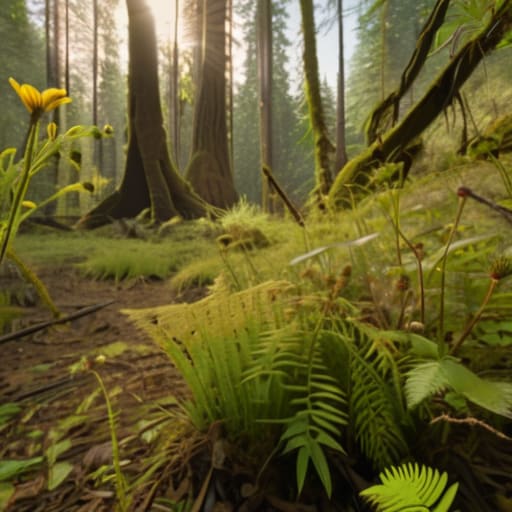
I spent three hours last Tuesday waist-deep in stinging nettles and damp brambles, trying to record a single flight of Bombus terrestris—the buff-tailed bumblebee—before the rain turned my field notes into a grey smudge. It’s easy to look at a patch of land that’s transitioned from a wildflower meadow into a dense, woody thicket and think you’ve “restored” it, but the reality of how succession changes habitats is rarely that tidy. We often fall into the trap of thinking that “more growth” automatically equals “more life,” when in reality, a field getting overgrown can actually wipe out the specific niche specialists we are trying so hard to save.
I’m not here to give you the glossy, oversimplified version of ecology you get from nature documentaries. Instead, I want to walk you through what the transect data actually tells us about these shifts, from the initial colonisation by grasses to the eventual dominance of scrub. I promise to tell you when the evidence for a specific conservation strategy is actually robust and when it’s just a well-meaning guess. We’ll look at the trade-offs of letting a site go wild, so you can understand the real mechanics of biodiversity without the academic jargon.
Table of Contents
Primary vs Secondary Succession Moving Beyond the Textbook Definitions
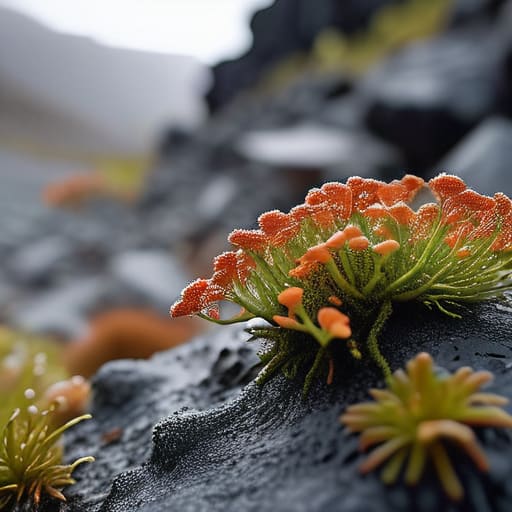
In a textbook, the distinction between primary and secondary succession feels like a clean, logical divide. You learn that primary succession starts from scratch—think bare volcanic rock or a retreating glacier—where soil formation in succession is the massive, slow-motion hurdle that has to be cleared before anything else can happen. It’s a painstaking process of lichens and mosses grinding down stone into something usable.
But when I’m out in the field, the distinction usually feels much more messy. Most of what we actually observe in the UK is secondary succession, triggered by the impact of environmental disturbances like a fallen tree, a patch of overgrazed pasture, or a farmer deciding to let a field margin go fallow. Here, the “reset button” isn’t a total wipeout; the soil is already there, the seed bank is waiting, and the biological community stages move at a much more frantic pace. We aren’t waiting for mountains to crumble; we’re watching a race between fast-growing weeds and the slower, more specialized insects that actually need those specific plants to survive.
Soil Formation in Succession Why the Foundation Matters More Than the Flora

We tend to focus on the “glamour shots” of succession—the dramatic shift from a bare rock to a towering canopy—but we often ignore the invisible engine driving the whole process: the soil. In the context of soil formation in succession, we aren’t just talking about dirt; we are talking about the creation of a complex, living matrix. In primary succession, you’re starting from absolute zero, where pioneer species like lichens have to literally etch life out of stone. It is an agonizingly slow process of breaking down minerals and adding organic matter, building a foundation where none existed.
When we look at ecological community development, the soil acts as the memory of the landscape. It dictates which seeds can actually take hold and how much moisture the ground can hold during a dry spell. This is why the transition between different biological community stages isn’t just about new plants arriving; it’s about the soil becoming chemically and structurally capable of supporting them. If the soil isn’t ready, the “next stage” of plants simply won’t stick, no matter how many seeds the wind carries in.
What to actually look for when a landscape starts shifting
- Stop looking for “more” life and start looking for “different” life. When a field transitions from grassland to scrub, your total insect count might actually drop before it climbs again, because the specialist species that loved the short grass are being squeezed out by the newcomers.
- Watch the structural complexity, not just the greenness. A patch of brambles provides a completely different microclimate—humidity, shade, and wind protection—than a manicured lawn, and it’s those tiny physical shifts that dictate which larvae can actually survive the night.
- Don’t mistake a “messy” field for a finished habitat. Succession is a moving target; a site in the middle of a transition is often more dynamic than a climax community, but it also means the species composition is inherently unstable.
- Prioritize the “edge effect” in your planning. The most intense biological activity often happens at the boundary where one successional stage meets another—like where a woodland meets a meadow—so if you’re managing land, aim for gradients rather than hard lines.
- Recognize that “climax” is often a bit of a myth. In the real world, especially with our changing climates and fragmented landscapes, many habitats are stuck in a state of perpetual transition, meaning we have to manage for a variety of successional stages rather than waiting for a “perfect” final state.
The Real-World Takeaways
Succession isn’t just a timeline of “more plants”; it’s a fundamental shift in the type of niches available, meaning a field getting overgrown might actually lose specific specialist insects even if the total biomass increases.
Don’t overlook the dirt—the way soil chemistry and structure evolve during succession dictates which species can actually colonize an area, often acting as a more significant bottleneck for biodiversity than the weather or the seed bank.
For conservation to actually work, we have to stop treating every patch of “wild” land as a monolith and start recognizing that different successional stages serve entirely different ecological functions.
The Long Game of a Changing Landscape
Ultimately, succession isn’t just a sequence of plants replacing one another; it is a fundamental restructuring of the local environment. We’ve seen how the distinction between primary and secondary succession dictates the starting line, and how the slow, invisible work of soil formation acts as the true engine of biodiversity. You can’t just plant a wildflower meadow and expect a stable ecosystem overnight if the subterranean foundation isn’t ready to support it. Understanding these shifts means recognizing that a landscape is never “finished”—it is a continuous, moving target where the composition of the soil is just as critical as the wings of the insects flying above it.
If there is one thing I’ve learned from years of staring at hedgerows, it’s that we need to stop viewing “overgrown” patches as messy or failed landscapes. Whether a site is in an early pioneer stage or moving toward a climax community, every phase provides a specific niche that we are still struggling to fully map. Instead of demanding a static, perfect garden, we should aim to steward the process itself. When we protect the transitionary spaces—the scrubby edges and the messy margins—we aren’t just saving a few species; we are protecting the dynamic machinery of life that allows nature to reinvent itself.
