
I was waist-deep in a bramble thicket last Tuesday, shivering in a damp field margin, trying to figure out why a specific cluster of Bombus terrestris—the buff-tailed bumblebee—was ignoring the perfectly good lavender I’d planted and heading straight for a patch of “weeds” no one bothered to name. It’s moments like that when I realize how much the textbooks fail us. Most people think how niches are defined is just a matter of checking a box for “food” and “shelter,” as if an organism is just a consumer in a shopping mall. In reality, a niche isn’t a static little slot in a diagram; it is the messy, overlapping reality of how a creature actually survives the chaos of a changing landscape.
I’m not here to give you a sanitized, academic lecture that reads like a manual for a toaster. Instead, I want to show you what the data actually looks like when you move past the buzzwords. We are going to look at the gap between the theoretical models and the actual field observations, moving through the specific variables that truly matter. I’ll tell you where the science is solid and where we’re mostly just making educated guesses, so you can understand the real mechanics of survival.
Table of Contents
The Flaw in Broad Market Assumptions

The problem with most people’s approach to niche definition is that they treat it like a static box you can just step into. In business, you’ll see people obsess over market segmentation strategies, trying to carve out a slice of a pie that might not even exist in the way they’ve imagined it. They look at a broad demographic and think, “There, that’s my space.” But in ecology, as in any real-world system, a niche isn’t a territory; it’s a set of interactions. If you assume a species—or a brand—occupies a fixed space without looking at the shifting variables around it, you aren’t actually understanding the environment; you’re just making an educated guess.
When we look at the competitive landscape analysis of a meadow, for example, we don’t just see “grass” and “flowers.” We see a high-stakes negotiation for sunlight, soil nitrogen, and specific pollinator windows. If you try to apply a “one size fits all” logic to these specialized segments, you miss the friction. You can’t just pick a spot on a map and claim it’s yours; you have to prove you can survive the specific, messy demands of that exact coordinate.
Micro Niche vs Broad Market Where the Data Lives
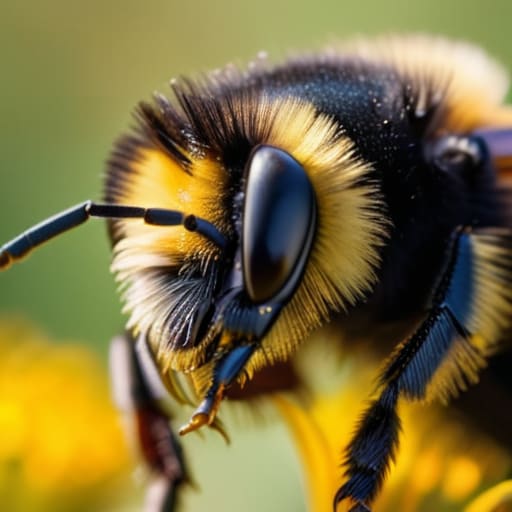
When I’m out on a transect, I don’t just report that “bees are present.” That’s a useless metric. If I tell a landowner they have “pollinators,” they might think they’re doing fine. But if I look closer, I might find they have a high density of Bombus terrestris—the common buff-tailed bumblebee—but zero specialists. This is where the distinction between a micro-niche vs broad market becomes vital. In ecology, a broad category is like a massive, sweeping demographic; it tells you a group exists, but it tells you nothing about whether they can actually survive in the specific conditions you’ve provided.
To truly understand a habitat, you have to move past those sweeping generalizations. It’s similar to how a business might look at identifying target audience segments; if you aim too wide, you miss the specific needs of the individual. In my field, if we don’t zoom in on the specialized market segments—the tiny, specific floral requirements of a single moth species, for instance—we end up with conservation plans that look great on paper but fail in the dirt. We need to stop looking at the “market” of insects as a monolith and start looking at the granular data.
Stop Guessing and Start Surveying: 5 Ways to Actually Define a Niche
- Stop treating a niche like a static box. In my fieldwork, a niche isn’t a fixed set of coordinates; it’s the actual, messy intersection of what an organism needs to survive and what the environment is currently providing. If the temperature shifts or a specific wildflower goes extinct, that “box” moves. Define it by the requirements, not just the location.
- Differentiate between the fundamental and the realized. This is a classic distinction that people often blur. A species’ fundamental niche is the full range of conditions where it could theoretically survive, but its realized niche is where it actually lives once you factor in predators, competitors, and that one neighbor who’s slightly better at finding nectar. If you’re defining a niche for conservation, you need to know which one you’re actually looking at.
- Look for the limiting factors, not the averages. It’s tempting to say a species lives in “temperate climates,” but that tells us nothing. A niche is defined by the constraints—the specific point where the soil gets too dry, the nights get too cold, or the host plant disappears. It’s the edges that define the niche, not the comfortable middle.
- Avoid the “single-data-point” trap. I see papers all the time that claim a species occupies a specific niche based on a single season of sightings. That isn’t a niche; that’s a snapshot. To truly define where a species fits, you need to see how it behaves across different times, weather patterns, and resource fluctuations.
- Account for the “invisible” variables. We talk a lot about temperature and food, but niches are often shaped by things we can’t see in a standard survey, like light intensity at the ground level or the specific chemical composition of a leaf. If you only define a niche using the big, obvious metrics, you’re going to miss why a population is actually thriving or crashing.
The Reality Check: Three Things to Remember
A niche isn’t a static “job description” for a species; it is a shifting, messy set of requirements for survival that changes depending on the weather, the soil, and what its neighbors are doing.
Beware of “niche-filling” generalizations in headlines; just because a species is present in an ecosystem doesn’t mean it’s performing the specific ecological function people assume it is.
Effective conservation relies on protecting the micro-habitats where the actual data lives, rather than just preserving a broad landscape that looks “natural” but lacks the specific granular resources a species needs to thrive.
Getting the Scale Right
If we take anything away from the distinction between broad markets and micro-niches, it’s that a label is never a substitute for a census. We’ve seen how easy it is to look at a massive, sweeping category and assume we understand the players within it, but as I’ve argued, that’s where the data usually falls apart. Whether you are looking at a commercial sector or a specific hedgerow in Oxfordshire, the reality is that meaningful definition requires granularity. You cannot claim to understand a niche by looking at the generalities; you have to look at the specific, messy interactions that allow a single entity to survive where others cannot. If the data is thin at the micro-level, we have to admit we are just guessing.
Ultimately, moving away from these oversimplified, “one-size-fits-all” definitions isn’t just about being more scientifically accurate—it’s about being more effective. When we stop chasing the broad, loud headlines and start focusing on the actual mechanics of survival, we move from vague concern to actionable strategy. It might feel slower and more tedious to track the small stuff, but that is exactly where the real work happens. If we want to protect something, or even just understand how a market truly functions, we have to be willing to look closer than the headline allows.
