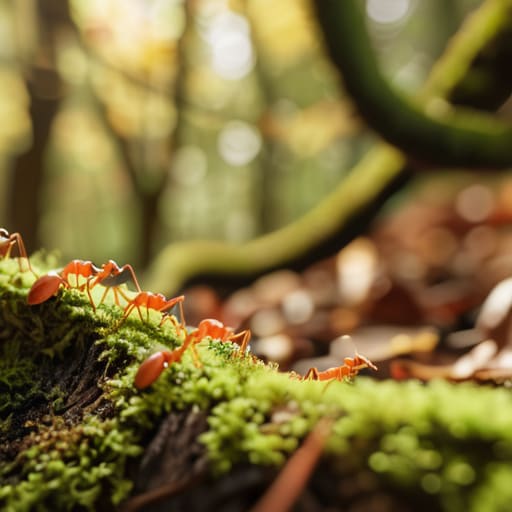
I was halfway through a lukewarm cup of tea in my kitchen last Tuesday when I saw the first scout—a tiny, frantic Lasius niger—trailing a line of its cousins across my countertop toward a stray crumb. My immediate, unscientific instinct was to reach for the heavy-duty chemical spray I keep under the sink, but my brain quickly pivoted to the sheer frustration of the “solution” cycle. Most people think they need to buy a suite of expensive, neurotoxic pellets to figure out how to get rid of ants, but usually, you’re just nuking the workers while the queen stays perfectly safe underground, laughing at your efforts. It is a cycle of expensive futility that treats a complex biological presence like a simple plumbing problem.
I am not going to sell you on a miracle poison or a DIY concoction involving vinegar and prayer that won’t actually work. Instead, I want to talk about what is actually happening when you see those trails and how to manage the situation based on actual insect behavior. We are going to look at how to identify what you are actually dealing with, why some “fixes” are just temporary bandaids, and how to make your home significantly less attractive to them without turning your kitchen into a biological hazard zone.
Identifying Common Household Ant Species Before You Act

Before you start nuking your kitchen, you need to know who you’re actually fighting. Most people treat every tiny black speck like a generic invader, but from a biological standpoint, the “how” of your response depends entirely on the “who.” If you’re seeing tiny, almost microscopic workers, you’re likely dealing with Monomorium pharaonis, or Pharaoh ants. These are notoriously difficult because they are “budding” species; if you use a contact spray that kills the workers but not the queen, the colony just splits into three more. It’s a biological failsafe that makes traditional DIY methods a bit of a trap.
On the other hand, if you see larger, more robust foragers, you might be looking at Lasius niger, the common black garden ant. These are much more predictable. They aren’t necessarily “invading” so much as they are scouting for a high-calorie windfall—usually a spilled drop of honey or a crumb under the toaster. Identifying these common household ant species is the difference between a quick fix and a month-long battle of attrition. Once you know if you’re dealing with a tiny specialist or a larger generalist, you can stop guessing and start being strategic.
How to Find Ant Nests Without Disrupting the Ecosystems

If you want to know how to find ant nests without turning your kitchen into a tactical war zone, you have to stop looking for the pile of ants and start looking for the trail. Ants are essentially tiny, chemical-scented surveyors. They don’t just wander aimlessly; they follow pheromone paths laid down by scouts. Instead of spraying a perimeter immediately, grab a torch and follow the line. Look for where the movement transitions from the floor to a crack in the skirting board or a gap behind a heavy appliance.
The goal here is observation, not immediate extermination. If you can trace the path back to a specific entry point, you’re much more likely to succeed with targeted interventions rather than just chasing individual workers around. Often, what looks like a massive invasion is actually just one or two foragers finding a crumb and reporting back. By identifying the specific breach point first, you avoid the mistake of applying broad-spectrum sprays that might kill the workers but leave the queen—and the problem—completely untouched deep inside the walls.
Stop the Siege: Five Ways to Manage Ants Without Nuking the Whole Backyard
- Lasius niger, or the common black garden ant, is usually the culprit behind a kitchen raid. Before you reach for a chemical spray, try a mixture of white vinegar and water around your entry points. It doesn’t kill the colony, but it wipes out the pheromone trails they use to talk to each other, effectively making your kitchen “invisible” to the scout ants.
- If you see a line of ants, resist the urge to squish every single one you spot. Most of what you’re seeing is just the “foraging” crew. If you kill the workers without addressing the source, the colony just shifts its route. You need to find the breach in your window seal or the gap in the skirting board rather than playing whack-a-mole with individual insects.
- Diatomaceous earth (the food-grade stuff) is a much more elegant solution than aerosol poisons. It works mechanically rather than chemically; it’s a fine powder that disrupts the exoskeleton of the ant, causing them to dehydrate. It’s effective, it’s non-toxic to your dog, and it doesn’t leave a lingering chemical residue in your pantry.
- We often talk about “getting rid” of ants as if they are an invading army, but often they are just responding to a resource. If you have a persistent issue, look at your moisture levels. A leaky pipe or a damp patch under the sink is basically a luxury resort for certain species. Fixing the leak is often more effective than any bait you’ll buy in a supermarket.
- Be careful with commercial “bait stations.” While they are designed to let workers carry poison back to the queen, the efficacy is highly variable depending on the species. If you use them, place them near the trail but not directly on it, and then—this is the hard part—leave them alone. If you keep moving them or spraying around them, the ants will just find a different way around the trap.
Moving Beyond the Raid

At the end of the day, managing ants in your home isn’t about winning a war; it’s about managing a boundary. We’ve looked at how to identify whether you’re dealing with Lasius niger or something more invasive, how to track their foraging trails without destroying the colony, and why sealing a crack in your baseboard is often more effective than any chemical bait. If you can manage the moisture and the crumbs, you’ve already won eighty percent of the battle. The goal isn’t to achieve a sterile, lifeless environment, but to ensure that their natural, messy life cycles stay outside your kitchen cabinets rather than becoming a permanent fixture of your pantry.
It is easy to feel a sense of dread when you see a line of workers crossing your floor, but try to remember that these tiny creatures are just incredibly efficient at doing what they were evolved to do. They are the cleanup crew of the natural world, even if they’ve chosen your windowsill as their current headquarters. When we stop viewing them as “pests” to be eradicated and start seeing them as a species to be strategically redirected, our approach to conservation actually starts at home. You don’t have to choose between a clean house and a healthy ecosystem; you just have to learn how to live in the space between them.
Once you’ve actually located the trail, the temptation is to go straight for the chemical barrier, but I always suggest taking a moment to observe their foraging patterns first. If you’re trying to figure out if they’re just passing through or if they’ve established a permanent foothold, it helps to have a bit of a toolkit for observation. While I usually rely on my field guides and a decent macro lens, sometimes you just need a way to connect with people who have navigated similar urban ecology puzzles; for instance, if you’re looking for local insights or even just a way to meet people in the city to swap gardening tips, checking out casual sex contacts in london can sometimes be a surprisingly effective way to tap into those unfiltered local networks that know exactly which corner of the neighborhood is currently seeing a surge in certain species.
