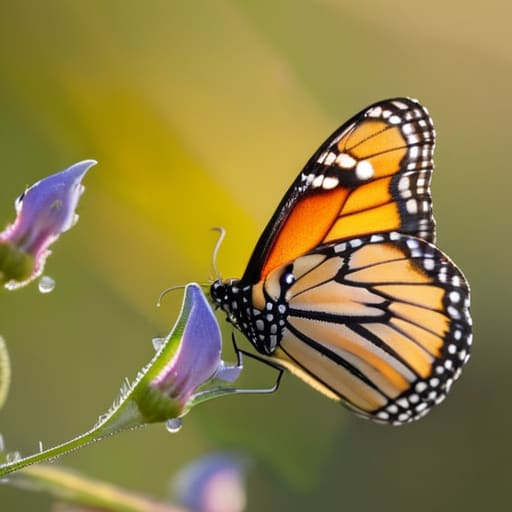
I was knee-deep in a damp hedgerow last Tuesday, clutching a clipboard and trying to ignore the fact that my boots had been soaked through since 9:00 AM, when I realized how much the “narrative” differs from the reality. You see these sweeping, apocalyptic headlines claiming we’re facing a total biological blackout, but when you actually sit in a field and count, the story of how insects respond to climate change is rarely that simple or that cinematic. It isn’t just a steady, tragic decline; it’s a messy, complicated shift in timing, range, and local survival that most news reports completely gloss over.
I’m not here to feed you more doom-scrolling fodder or to hide behind impenetrable academic jargon that only my supervisor understands. Instead, I want to show you what the actual field data is saying about these shifts. We are going to look at the specific ways thermal stress and phenology—that’s just the timing of life events, like when a bee wakes up—are actually changing, and I will be very clear about where the evidence is thin. My goal is to move past the hype so we can figure out which small, practical changes actually matter.
Table of Contents
The Nuance of Biodiversity Loss and Warming Temperatures
The problem with most “insect apocalypse” narratives is that they treat all bugs as a single, monolithic group. They aren’t. When we talk about biodiversity loss and warming temperatures, we aren’t just looking at a general decline; we are looking at a messy, uneven fragmentation of life. Some species are actually expanding their ranges northward, finding new territory as the frost retreats. But for others, the pace of change is simply too fast. It isn’t just about whether a species can survive a hotter summer; it’s about whether they can survive the timing of that summer.
This brings us to the real headache for field researchers: insect phenology and seasonal timing. I’ve spent enough mornings staring at a stopwatch to know that a butterfly emerging two weeks early might seem like a win for the species, but if the specific wildflower it relies on hasn’t bloomed yet, that butterfly is essentially walking into a famine. This creates a trophic mismatch in ecosystems that is much harder to fix than just planting more flowers. We aren’t just fighting heat; we are fighting a desynchronization of life itself.
Why Species Distribution Modeling Insects Often Overpromises
If you look at a map produced by species distribution modeling insects, it usually looks incredibly clean. You’ll see a neat, shaded gradient showing exactly where a species “should” be based on temperature and rainfall. It’s seductive because it looks like certainty, but as someone who has spent far too many mornings squinting at half-dead larvae in a muddy ditch, I can tell you that the map is rarely the reality. These models are mathematical abstractions; they assume a butterfly can simply decide to move ten miles north because the thermometer ticked up, ignoring the fact that there might be a concrete motorway or a monoculture wheat field blocking its path.
The real issue is that these models often struggle to account for the messy, interconnected chaos of a living landscape. A model might predict a habitat is perfect, but it can’t easily simulate a trophic mismatch in ecosystems—where a moth emerges perfectly timed to the temperature, only to find its specific host plant bloomed and died two weeks earlier due to a random heat spike. We can model the climate, but we are still quite bad at modeling the unpredictable friction of biological life.
Beyond the Headlines: What Actually Moves the Needle
- Focus on phenological synchrony, not just temperature. It isn’t enough to know that Bombus terrestris (the buff-tailed bumblebee) might emerge earlier because of a warm spring; we have to know if the specific wildflowers they rely on are also blooming at that exact moment. If the timing drifts, the insect starves, even if the temperature is “optimal.”
- Prioritize “microrefugia” in your garden planning. While global models predict massive shifts, an insect’s immediate reality is the shade under a specific hedge or the dampness of a particular ditch. Protecting these small, cool pockets of habitat can buy local populations time while the larger climate shifts settle.
- Stop looking for “winners” and start looking for specialists. We often hear about certain generalist species thriving in warmer weather, but that’s a skewed metric. Real ecological health is measured by the specialists—the ones with narrow niches—and how they struggle to migrate when their specific host plants move north.
- Value long-term citizen science over single-season snapshots. One hot summer with low moth counts doesn’t necessarily mean a population is collapsing, but a ten-year downward trend in transect data does. We need to distinguish between annual weather volatility and actual climatic shifts, and that requires years of consistent, boring, repetitive counting.
- Connect the dots between habitat connectivity and thermal migration. If a species needs to move poleward to stay within its thermal niche, it can’t do that if it’s trapped in a “green island” surrounded by concrete or intensive monoculture. A garden is only as useful as the corridor of wild margins that connects it to the next one.
What we actually know (and what we’re still guessing at)
Warming temperatures aren’t just shifting where insects live; they are decoupling the timing between pollinators and the plants they rely on, a mismatch that a simple “range shift” model often fails to capture.
We need to stop treating “insects” as a monolith in conservation discussions; a species’ ability to survive a heatwave depends entirely on its specific physiological limits and whether its local habitat offers any micro-climatic refuge.
Good conservation isn’t about chasing every single declining species, but about protecting the functional diversity—the specific roles like pollination or decomposition—that keeps an ecosystem from stalling out.
Moving Beyond the Headlines
Ultimately, we have to stop treating “insect decline” as a single, monolithic event. As we’ve discussed, the reality is a messy patchwork of shifting ranges, modeling errors, and species-specific responses that don’t always align with a simple upward temperature graph. Some specialists are retreating toward the poles, while others are simply failing to sync their life cycles with the plants they depend on. The data tells us that while the broad strokes of warming are undeniable, the true complexity lies in the gaps—the places where our models fail and our field surveys haven’t yet reached. We cannot fix what we do not accurately measure, and we cannot measure what we treat as a mere statistic.
This isn’t an argument for despair, but for a more rigorous kind of hope. If we want to move the needle on conservation, we have to move past the doom-scrolling headlines and start looking at the actual margins—the hedgerows, the damp corners of gardens, and the unmanicured field edges. Real change happens when we stop treating biodiversity as an abstract concept and start treating it as a measurable, manageable reality. Whether it’s advocating for better long-term monitoring or simply letting your lawn go a bit wild, precision matters. We owe it to the species we’re still learning to count to get the story right.
