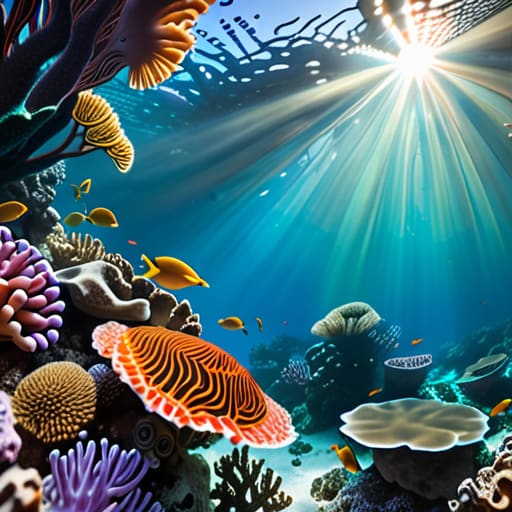
I spent three years counting bumblebees in the damp, grey margins of hedgerows, so I’ve developed a bit of a low tolerance for sweeping, romanticized metaphors. When people talk about how coral reefs support ocean life, they usually default to that tired “rainforest of the sea” comparison, which sounds lovely on a documentary poster but tells you absolutely nothing about the actual mechanics of survival. It’s a massive, beautiful generalization that obscures the granular reality of what’s happening under the surface. We don’t need more poetic imagery; we need to understand the structural complexity and the specific nutrient cycling that keeps these systems from collapsing.
In this piece, I’m stripping away the breathless headlines to look at what the data actually shows us. I won’t give you a lecture on why reefs are “precious,” but I will explain the specific ways these calcium carbonate structures function as essential nurseries and foraging grounds. My goal is to move past the vague sentimentality and look at the functional ecology of the reef, providing a clear-eyed view of why these ecosystems are so incredibly difficult—and vital—to maintain.
Mapping Marine Biodiversity in Coral Reefs Without the Hyperbole
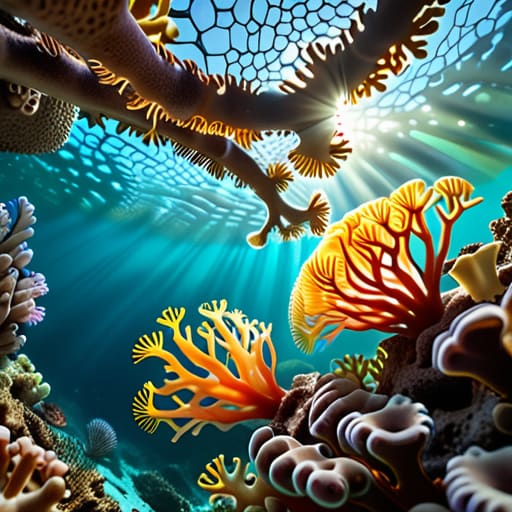
When I’m out on a transect counting bumblebees, I’m constantly reminded that “biodiversity” is a massive, messy word that people often use as a synonym for “lots of animals.” In the context of marine biodiversity in coral reefs, we have to be more precise. It isn’t just about the number of species present; it’s about the functional architecture they build together. A reef isn’t just a pile of calcium carbonate; it is a living, structural engine. If you look at the data, the real magic—and the real fragility—lies in the specialized niches created by the physical complexity of the coral itself.
We often hear sweeping claims about the importance of coral reef ecosystems, but if we strip away the hyperbole, we’re really looking at a high-stakes game of resource management. The coral reef food webs are incredibly tight; every calorie is accounted for. When we talk about the impact of coral bleaching on marine species, we aren’t just talking about “losing color.” We are talking about the structural collapse of a nursery. When the coral dies, the architecture flattens, and the specific, tiny organisms that rely on those crevices simply have nowhere to go. It’s a loss of habitat, not just a change in scenery.
The Fragile Reality of Symbiotic Relationships in Ocean Life
When we talk about symbiotic relationships in ocean life, the conversation usually gravitates toward the “heroic” partnerships—the clownfish and the anemone, for instance. It’s a tidy, cinematic image. But if you look at the actual mechanics of a reef, the most critical dependencies are often much less photogenic and far more precarious. We are talking about the metabolic handshake between scleractinian corals and their endosymbiotic dinoflagellates, known as zooxanthellae. This isn’t just a casual arrangement; it is a high-stakes biological transaction where the coral provides shelter and compounds for photosynthesis, and the algae provide the energy required to build the calcium carbonate skeleton.
The problem is that this entire architecture is built on a knife-edge. When thermal stress occurs, that handshake breaks. The impact of coral bleaching on marine species isn’t just about the coral turning white; it is about the sudden, systemic failure of the energy supply that fuels the entire neighborhood. When the zooxanthellae are expelled, the foundation of the coral reef food webs begins to crumble from the bottom up. It isn’t a sudden collapse of every fish in the sea, but rather a slow, structural unravelling that makes survival significantly harder for everything else.
Moving Beyond the Metaphor: Five Ways Reefs Actually Function
- Stop calling them “nurseries” as a catch-all; we need to look at the specific structural complexity of the calcium carbonate skeletons. It isn’t just a “home,” it’s a high-stakes architectural requirement for larval settlement and refuge from predation.
- Recognize that nutrient cycling is a closed-loop system, not an infinite buffet. The relationship between zooxanthellae and the coral host is a precise metabolic exchange that keeps these “deserts” productive, and if that specific chemistry shifts, the entire local food web loses its foundation.
- Acknowledge the difference between species richness and functional diversity. A reef might have a high count of different fish, but if they all occupy the same niche, the ecosystem is actually much more vulnerable to a single environmental shock than the headlines suggest.
- Look at the connectivity, not just the reef itself. A healthy reef doesn’t exist in a vacuum; it relies on the specific flow of nutrients from adjacent seagrass beds and mangroves, creating a corridor of survival rather than an isolated island of life.
- Distinguish between “resilience” and “recovery.” Just because a reef looks colorful again after a bleaching event doesn’t mean the underlying community structure has returned to its previous state; we have to measure the actual population stability of the key functional groups, not just the aesthetic cover.
Beyond the Pretty Pictures
When we strip away the sweeping metaphors, the data shows that coral reefs aren’t just “beautiful backdrops”; they are complex, high-stakes biological infrastructure. We’ve looked at how these structures function as essential nurseries and how the intricate symbiotic dependencies—like that relationship between coral polyps and zooxanthellae—form the literal foundation of the ecosystem. It is easy to get lost in the sheer scale of the biodiversity, but the reality is more granular. It is about the specific niche availability and the precise nutrient cycling that keeps the surrounding water from becoming a desert. If we lose the structural integrity of the reef, we don’t just lose the color; we lose the functional architecture that allows thousands of unrelated species to coexist in a single square meter.
I know that reading about collapsing ecosystems can feel like staring into a void, but there is a massive difference between “doom” and “data.” Understanding the specific mechanisms of how reefs support life allows us to move past the panic and toward targeted, evidence-based conservation. We don’t need more alarmist headlines; we need to protect the specific environmental variables that allow these biological machines to keep running. If we focus on the actual science of reef resilience rather than just the aesthetics, we might actually stand a chance at preserving the complexity that makes our oceans work.
If you’re feeling overwhelmed by the scale of these shifts, I find it helps to step away from the data sheets and actually see what’s happening on the ground. It is one thing to read a paper on shifting species distributions, but it is quite another to stand in a coastal ecosystem and observe the actual physical changes in the community structure yourself. I often suggest that if you want to move beyond passive reading, the best way to build a practical understanding is through meeting people in region who are already doing the legwork, whether they are citizen scientists or professional surveyors. Connecting with those who are actively monitoring these environments provides a ground-level perspective that a textbook simply cannot replicate.
