
I was waist-deep in a bramble thicket last Tuesday, trying to map a patch of Japanese knotweed, when I realized that the public discourse around ecology is fundamentally broken. Most people think that knowing how invasive species are managed is just a matter of spraying more chemicals or declaring a high-stakes war on a single plant. It’s always framed this way in the news: an “outbreak,” a “threat,” and a massive, expensive solution that usually ends up being a band-aid. But after three years of staring at hedgerows and counting things that don’t want to be found, I’ve learned that the real work isn’t about dramatic interventions; it’s about the tedious, unglamorous science of monitoring and site-specific ecology.
I’m not here to sell you on a miracle cure or a terrifying headline. Instead, I want to pull back the curtain on what the actual field data shows about how invasive species are managed on the ground. We are going to look at why early detection is more important than any heavy-duty herbicide, and why some “successful” management plans are actually just expensive ways to fail. I’ll tell you where the evidence is solid and where we’re mostly just guessing, so you can stop worrying about the hype and start understanding the actual mechanics of conservation.
Table of Contents
Chemical vs Mechanical Control Moving Beyond the Quick Fix Narrative

When people think about managing an outbreak, they usually picture a sprayer or a heavy-duty hoe. It’s the classic debate of chemical vs mechanical control, and the media loves it because it’s easy to visualize. If you spray a herbicide, you’ve “solved” the problem. If you pull weeds by hand, you’ve “worked” the problem. But in my experience—usually while knee-deep in a damp field margin trying to find a single specific beetle—the reality is rarely that binary. Chemicals can offer a fast knockdown, but they often lack the surgical precision needed to avoid collateral damage to the local flora.
On the flip side, mechanical methods like pulling, digging, or even controlled burns are incredibly labor-intensive and often only address the symptoms rather than the source. We tend to treat these as “quick fixes,” but if you aren’t integrating them into broader ecosystem restoration strategies, you’re just running on a treadmill. It’s not about picking the “best” tool; it’s about understanding that a single application of glyphosate or a weekend of weeding won’t undo decades of ecological shifts. We need to look at how these interventions actually interact with the soil and the native species trying to hold their ground.
Why Preventing Species Introduction Outperforms Reactive Management
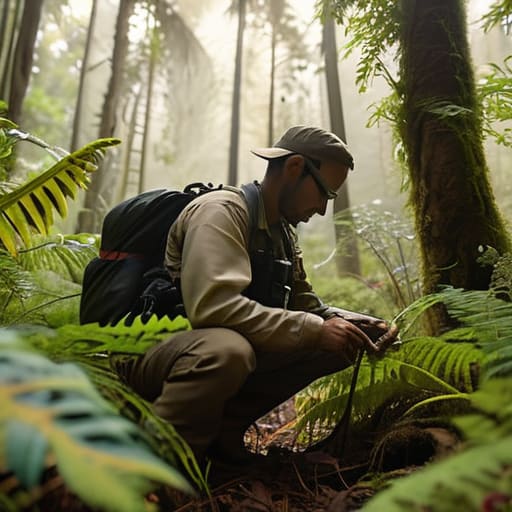
The problem with reactive management is that it’s almost always a game of catch-up, and in ecology, catching up is incredibly expensive. Once a species has established a foothold—once it has moved from a single accidental arrival to a self-sustaining population—the math changes entirely. We shift from simple monitoring to complex wildlife management techniques that require constant, high-intensity intervention. I’ve seen it in the field: you spend years trying to suppress a population in a specific hedgerow, only to realize you’re just treating the symptom of a much larger, unaddressed arrival.
If we shift our focus toward preventing species introduction at the borders or through stricter biosecurity, we aren’t just saving money; we are preserving the integrity of the habitat before the damage becomes structural. It is far more effective to keep a niche vacant or occupied by a native specialist than to try and engineer an entire landscape to survive a takeover. Proactive prevention is the only way to ensure that our long-term ecosystem restoration strategies actually have a stable foundation to build upon, rather than just being a permanent battle against an incoming tide.
Fieldwork Reality: How We Actually Tackle a Spread
- Prioritize early detection over mass eradication. In my surveys, I’ve seen that finding a single patch of Fallopia japonica (Japanese Knotweed) in a manageable corner of a field margin is a victory; waiting until it’s a dense, monocultural thicket makes the management conversation much more expensive and much less effective.
- Focus on “buffer zones” rather than just the epicenter. If you only treat the heart of an infestation, you often miss the satellite populations creeping through the hedgerows. Management needs to look at the surrounding landscape, not just the spot where the plant is most obvious.
- Stop looking for the “silver bullet” herbicide. Real management is about integrated approaches—using mechanical removal to disrupt the canopy, followed by targeted treatments. Relying on one single chemical spray is a recipe for developing resistance and ignoring the broader ecological impact on non-target species.
- Monitor the “empty” spaces, not just the infested ones. We spend so much time documenting where the invasive species are that we forget to check the areas where they shouldn’t be yet. Good management is as much about the absence of a species in a survey plot as it is about the presence of one.
- Build management plans around local ecology, not just species biology. An invasive plant behaves differently in a dry, sandy soil than it does in a damp, nutrient-rich ditch. If your management strategy doesn’t account for the specific habitat of your survey site, you’re just guessing.
What to actually remember when the headlines start swirling
Stop looking for the “silver bullet” solution; managing an invasive species is rarely about choosing between one chemical spray or one mechanical tool, but rather about how we layer those methods to avoid just moving the problem around.
Prevention is the only metric that actually scales; once a species is established in a local ecosystem, the energy and money required to manage it will always dwarf the cost of the biosecurity measures that could have stopped it at the border.
We need to value long-term monitoring over short-term eradication; a “successful” management program isn’t one that claims to have wiped something out in a single season, but one that uses consistent, boring, and rigorous data to prove a population is actually trending downwards.
Moving from Reaction to Resilience
When we strip away the sensationalist headlines, managing invasive species isn’t about finding a “silver bullet” chemical or a single heroic intervention. It is a messy, long-term commitment to understanding local ecology. We have seen that while mechanical removal offers a localized fix, it rarely addresses the systemic drivers of an invasion. Similarly, while prevention is our most efficient tool, it requires a level of sustained vigilance that is often difficult to fund or maintain. Real management means acknowledging that we are often playing a game of catch-up, and the only way to win is to prioritize ecological stability over quick, visible victories that might only mask the underlying problem.
Ultimately, my time spent in the field has taught me that nature is incredibly resilient if we stop trying to “fix” it with blunt instruments and start supporting its natural defenses. We don’t need more panic; we need more nuanced, evidence-based stewardship. Whether it is monitoring a single hedgerow or rethinking how we manage entire landscapes, the goal is to build ecosystems that are robust enough to withstand the next arrival. If we focus on strengthening the native foundations rather than just fighting the invaders, we move from a state of constant crisis management to one of genuine, lasting conservation.
